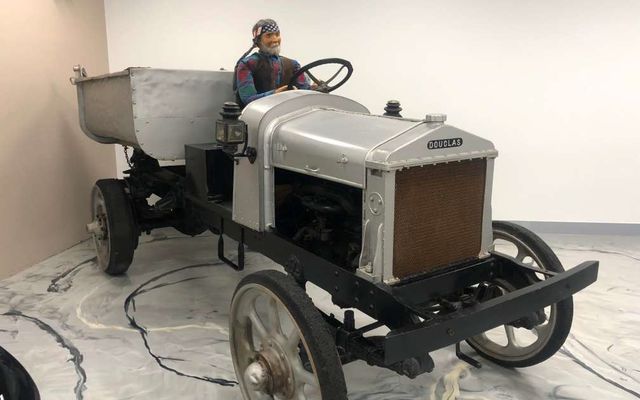
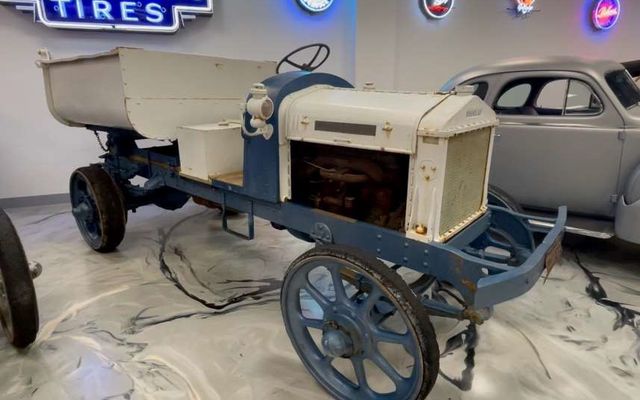
- Power
- 9 hp
- Top speed
- 12 mph
The Benz Patent-Motorwagen (built in 1885), is widely regarded as the world’s first piston-powered production automobile. On January 29, 1886 Karl Benz patented the three-wheeled Patent-Motorwagen (patent number 37435). Later in the same year, just 60 miles away, Gottlieb Daimler patented an internal-combustion engine and began with the construction of a four-wheeled horseless carriage. Neither Benz nor Daimler were aware of the other's work.
Karl's wife Bertha Benz, whose dowry financed their enterprise, was aware of the need for publicity. She took the Patent-Motorwagen No. 3 and drove it on the first long-distance internal combustion automobile road trip to demonstrate its feasibility. She took her sons Eugen and Richard, fifteen and fourteen years old, on the 121-mile trip in August 1888. As well as being the driver, Benz acted as mechanic on the drive, cleaning the carburetor with her hat pin and using a garter to insulate wire. She refueled at a local pharmacy along the route, taking on ligroin as fuel, making it the first filling station in history. As the brakes wore down, Benz asked a local shoemaker to nail leather on the brake blocks, thus inventing brake linings.
In commemoration of the 100-year anniversary of the Benz Patent-Motorwagen, Mercedes-Benz produced a series of fully functioning replicas of the Benz Patent-Motorwagen, mainly for dealer exhibits.
Spec sheet
- 9 horsepower engines at 400 pm
- Total loss oiling system
- Steered by a tiller, not a steering wheel
- Top speed of 12 mph
- Chain drive on both sides
The Brass Era / 1886–1915