No. 005 of 217
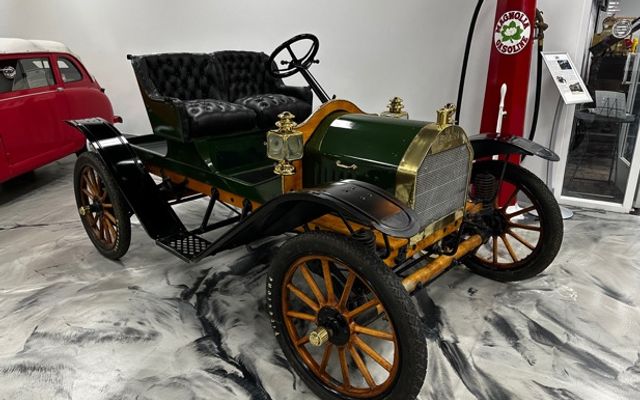
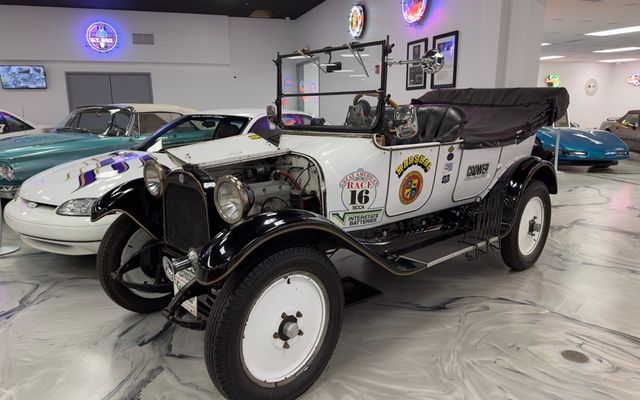
Although the company's cars are seldom seen today, Maxwell was a significant manufacturer of the early 20th century and was the first quality produced car to use drive shaft instead of chains. The twin-cylinder Maxwell runabouts were popular due to their competitive price tag and durable engines.
Maxwell cars earned a solid reputation through performances in many reliability tours. In fact, Maxwell was one of the first car companies to market specifically to women. In 1909, it generated a great deal of publicity when it sponsored Alice Huyler Ramsey, an early advocate of women drivers, as the first woman to drive coast-to-coast across the United States, (an unheard-of event prior to that time). By 1914, the company had strongly aligned itself with the women's rights movement. In 1910, Maxwell ranked third in U.S. sales behind Ford and Buick.
Maxwell eventually over-extended and wound up deeply in debt, with over half of its production unsold in the post-World War I recession in 1920. The following year, Walter P. Chrysler arranged to take a controlling interest in Maxwell Motors, subsequently re-incorporating it in West Virginia with himself as the chairman. One of his first tasks was to correct the faults in the Maxwell, whose quality had faltered. This improved version of the car was marketed as the "good Maxwell".
Around the time of Chrysler's takeover, Maxwell was also in the process of merging, awkwardly at best, with the ailing Chalmers Automobile Company. Chalmers ceased production in late 1923.
Comedian Jack Benny made the Maxwell a household name when he used the car as a comedic prop on his popular radio and TV shows from the 1930s until the 1960s. He and Maxwell also gained exposure in commercials.
2-cylinder L-head engine
Rear-wheel drive
14 horsepower
Original price was $600
The Brass Era / 1886–1915