No. 009 of 217
This Ford Depot Hack (or station wagon) was used to transport people from the train depot at Yosemite National Park to the hotels nearby. This is a complete frame-off restoration.
The Depot Hack was made to hold luggage and passengers and was used as a minibus-like vehicle or taxi. It was specifically built to hold a high capacity of people and their luggage; the depot hack was not on Ford's catalogue but was made by independent firms who used as a passenger vehicle.
The names "station wagon" and "depot hack" did not come into existence by coincidence. In the early days of the automobile, most people still traveled by train from city to city. Vehicles were sent by hotels to pick up visitors and their baggage to bring them back to the hotel. They were wagons sent to the station or hacks sent to the depot, thus "station wagon" or "depot hack." This gave rise to a new industry, as wagon builders typically took a truck or large-car chassis and added a simple wooden body with many seats and room for luggage.
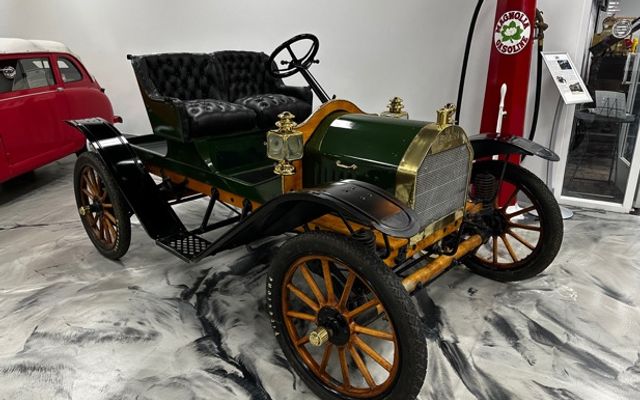
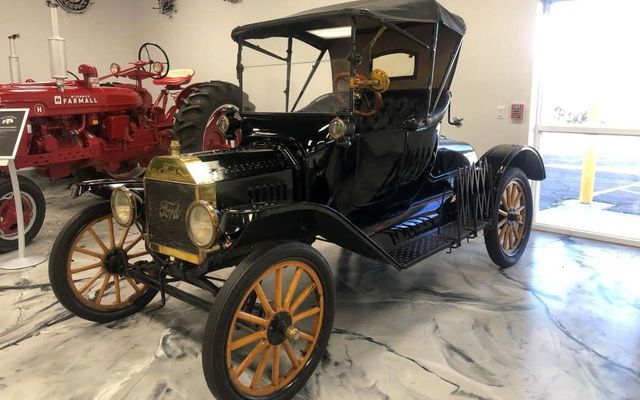
The Ford Model T used a 177 cu in (2.9 L) sidevalve, reverse-flow cylinder head inline 4-cylinder engine. It was primarily a gasoline engine. It produced 20 hp (14.9 kW) for a top speed of 45 mph (72 km/h). It was built in-unit with the Model T's novel transmission (a planetary design), sharing the same lubricating oil.
The T engine was known for its simplicity, reliability, and economy. The engine remained in production for many years, and millions of units were produced. The engine design's lifespan exceeded that of the Model T vehicle itself, with industrial, marine, and military applications extending its production run. The T engine is on the Ward's 10 Best Engines of the 20th Century list.
The T engine was produced continuously from September 27, 1908, through August 4, 1941, exactly 12,000 days. This makes it one of the longest engines in series production, especially considering that the specifications remained mostly unchanged for this entire duration. Its production run for the U.S. consumer market for passenger cars and pickups was shorter, being the 19 years' production run of the Model T itself for that market (1908 to 1927). But the engine continued to be produced and sold to various consumer, industrial, military, and marine markets throughout the world until 1941.
Engine: 177 cu. in. 4-cylinder
Power: 20 hp
Top Speed 45 mph
Transmission: 2-speed planetary
The Brass Era / 1886–1915