No. 003 of 217
REO was an American automotive manufacturer founded in 1905. Named for its founder, Ransom E. Olds, REO created a wide range of trucks and cars during the company's history. REO is most well-known for its Royale and Flying Cloud models, but it also produced a wide array of trucks and busses. By 1907, REO had gross sales of $4.5 million, and the company was one of the four wealthiest automobile manufacturers in the U.S.
After 1908, despite the introduction of improved cars designed by Olds, REO's share of the automobile market decreased due in part to competition from emerging companies like Ford and General Motors. REO was purchased by the White Motor Company and merged with Diamond T Trucks to create Diamond REO Trucks in 1967 - ending the REO brand. Perhaps the most historical REO event was the 1912 Trans-Canada journey. Traveling 4, 176 miles from Halifax, Nova Scotia, to Vancouver, British Columbia, in a 1912 REO special touring car, mechanic/driver Fonce V. (Jack) Haney and journalist Thomas W. Wilby made the first trip by automobile across Canada (including one short jaunt into northeastern Washington State when the Canadian roads were virtually impassable).
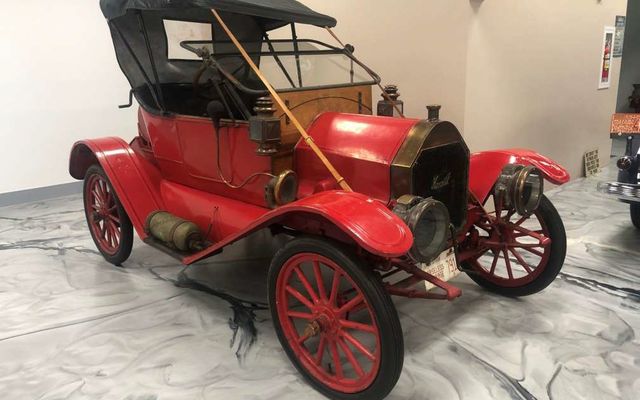
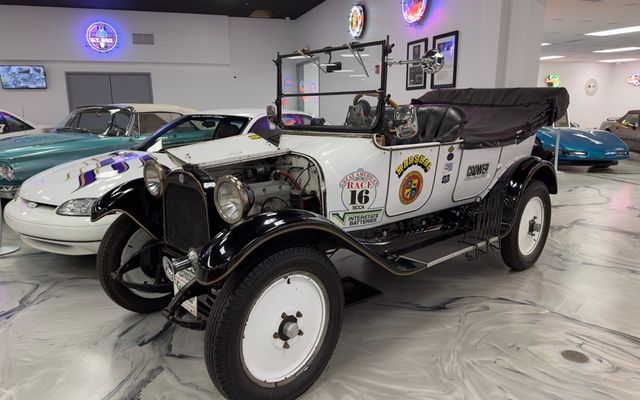
This 1909 REO Five-Passenger Touring Car is a running and fully operational vehicle and an excellent example of the brand.
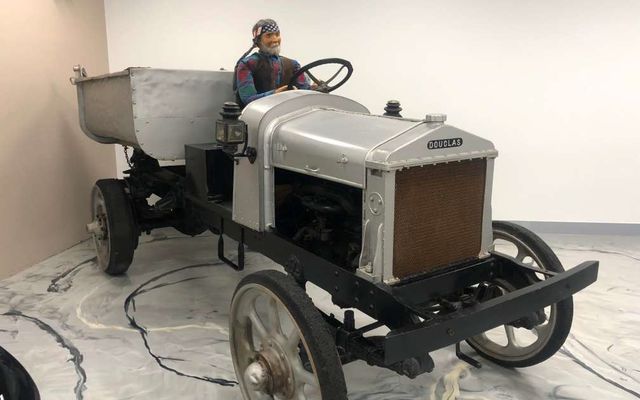
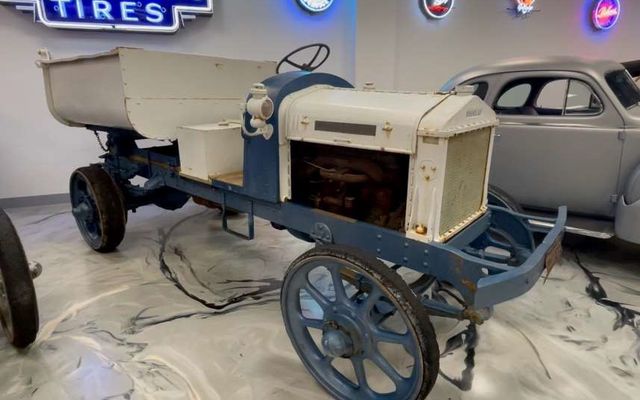
As the story goes, Neal Doughty is credited with coming up with the group’s moniker. While taking a class in college on “The History of Transportation,” he saw the term “R.E.O. Speedwagon” written on the blackboard. The R.E.O Speedwagon was a vehicle popular in 1915 from the Oldsmobile automotive company. Ostensibly, it was an ancestor of the pick-up truck today. It seems that sometimes the best band names come from the most unlikely of sources.
213 cubic-inch, two-cylinder
20 horsepower
Two-speed planetary transmission
Three-quarter elliptic front springs with full elliptic rear springs
Rear wheel drum brakes
96-inch wheelbase
1909 REO Touring Car
Rick DeBruhl - "Where is the engine in this 1909 REO"
The Brass Era / 1886–1915