No. 189 of 217
Ferrari partnered with Alcoa to produce an entirely new all-aluminum space-frame chassis that was 40% stiffer than its predecessor's which had utilized steel. The design was 28% lighter despite a 10% increase in overall dimensions. Along with a lightweight frame the new Pinin farina body styling deviated from traditions of the previous decade's sharp angles and flip-up headlights. The new V8 engine utilizes a 3.6-litre capacity, a flat-plane crankshaft, and titanium connecting rods. The engine generates a power output of 400 PS (294 kW; 395 hp). According to Ferrari, weight was reduced by 60 kg (130 lb.) and the 0 to 100 km/h (62 mph) acceleration time improved from 4.7 to 4.5 seconds.
The first model to be produced was the 360 Modena, followed later by the 360 Spider and a special edition, the Challenge Stradale. The Challenge Stradale was the high-performance road-legal version of the 360 produced by the factory, featuring carbon ceramic brakes (from the Enzo), track-tuned suspension, aerodynamic gains, weight reduction, power improvements and revised gearbox software among its track-focused brief. There were 8,800 Modenas and 7,565 Spiders produced worldwide. There were 4,199 built for the US market—1,810 Modenas (coupes) and 2,389 Spiders (convertibles). Of those numbers, there were only 469 Modenas and 670 Spiders that were produced with a gated 6-speed manual transmission as opposed to the "F1" single-clutch automated manual transmission.
In addition to this were the low-volume factory race cars and a one-off Barchetta variant. The race cars were all derived from the 360 Modena and for the first time produced as a separate model in their own right (compared to being a retrofit kit in previous years). While the Barchetta was based on the Spider variant. The first race car was the 360 Modena Challenge, used in a one-make series; the factory-built racing cars were prepared by the official tuner, Michelotto, who also developed the 360 N-GT. The N-GT was a 360 Challenge car evolved even further to compete in the FIA N-GT racing class alongside other marques such as Porsche.
The Ferrari 360 Spider was unveiled at the 2000 Geneva Motor Show.
The 360 was designed with a convertible variant in mind; since removing the roof of a coupe reduces the torsional rigidity, the 360 was built for strength in other areas. Ferrari designers strengthened the sills, stiffened the front of the floorpan and redesigned the windscreen frame. The rear bulkhead had to be stiffened to cut out engine noise from the cabin. The convertible's necessary dynamic rigidity is provided by additional side reinforcements and a cross brace in front of the engine. Passenger safety is ensured by a strengthened windscreen frame and roll bars.
The 360 Spider displays a curvilinear waistline. The fairings imply the start of a roof, and stable roll bars are embedded in these elevations. Due to use of light aluminum construction throughout, the Spider weighs in only 60 kg (130 lb.) heavier than the coupé.
As with the Modena version, its 3.6 L (3,586 cc) V8 generating a power output of 400 PS (294 kW; 395 hp) is on display under a glass engine cover. The engine — confined in space by the convertible's top's storage area — acquires additional air supply through especially large side air intakes. The intake manifolds were moved towards the center of the engine between the air supply conduits in the Spider's engine compartment, as opposed to lying apart as with the Modena. In terms of performance, the 0-97 km/h (60 mph) acceleration time was slightly slower due to the slight weight increase, and the top speed was reduced.
Despite the car's mid-mounted V8 engine, the electrically operated top is able to stow into the compartment when not in use. The convertible top was available in black, blue, grey and beige colors.
Specifications (Modena and Spider)
$169,835 msrp in 2001 (equal to $295,932 in 2024)
Dimensions
Overall length: 176.3 in
Overall width 75.7 in
Height: 48.6 in
Wheelbase: 102.4 in
Front track: 65.7 in
Rear track: 63.7 in
Weight: 2,976 lb.
Curb weight: 3,424 lb.
Weight distribution: 42/58% front/rear
Fuel capacity: 25 US gal
Engine
The Tipo F131 V8 engine
Type: 90° V8 F1310-00
Bore & stroke: 3.35 in × 3.11 in
Total displacement: 218.8 cu in
Redline: 8,500 rpm
Maximum power: 400 PS (294 kW; 395 hp) at 8,500 rpm
Maximum torque: 275 lb-ft at 4,750 rpm
Performance
Top speed: Redline limited - 175 mph / Manufacturer claim - 183 mph
Acceleration:
0-60 km/h (37 mph): 2.47 seconds
0-97 km/h (60 mph): 4.6 seconds
0-100 km/h (62 mph): 4.98 seconds
0-120 km/h (74.5 mph): 6.79 seconds
0-160 km/h (100 mph): 11.1 seconds / 11.7 seconds
0-210 km/h (130 mph): 21.9 seconds
Standing 1⁄4 mile (402 mph): 13.1–13.2 seconds at 106–110 mph
Standing kilometer: 23.74 seconds
Braking: 70 mph - 0 mph: 165–175 ft
Speed through 600 ft slalom: 69.0 mph
EPA fuel economy
City: 10 mpg
High way: 15 mpg
Combined: 11 mpg
Est. range:
City: 250 mi
High way: 375 mi
Modern & Imports / 1980–Today
More from the collection.
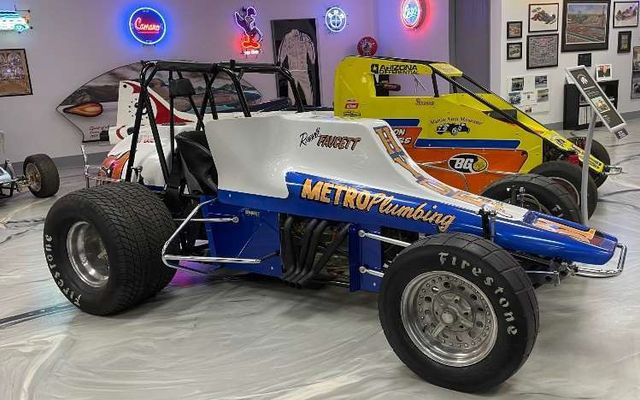
1980 Metro Plumbing Sprint Car
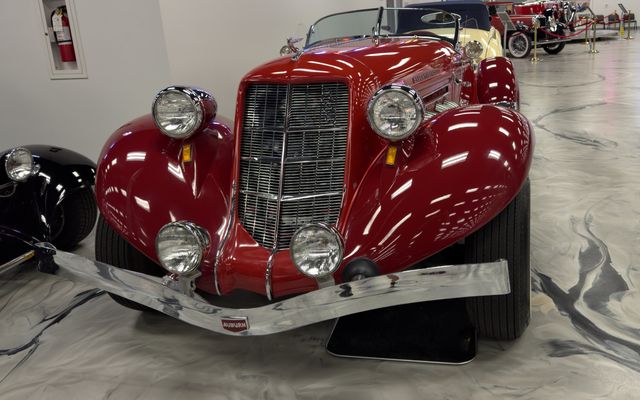
1980 Auburn 866 Boattail Speedster (Replica)
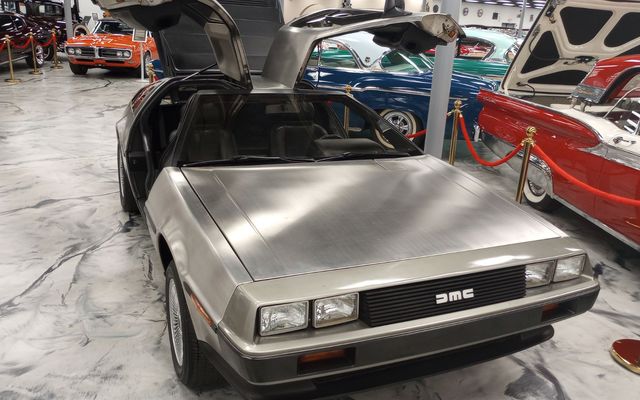
1981 DMC DeLorean
1987 Chevrolet El Camino Custom
1988 Pontiac Grand Prix SE (Daytona 500 Pace Car Edition)
1990 Ford NASCAR "Baby Ruth Car"
1991 Buick Reatta Convertible
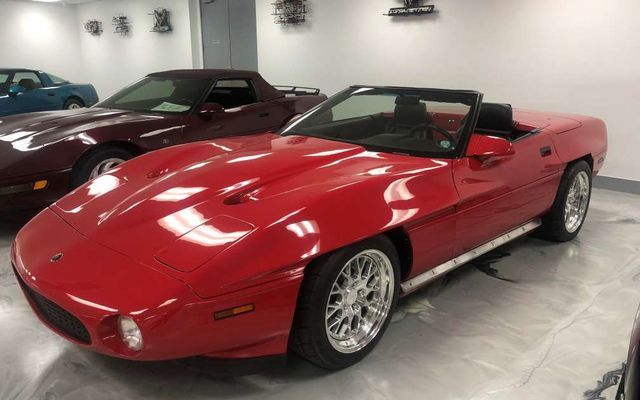
1992 Chevrolet Corvette Lister C4
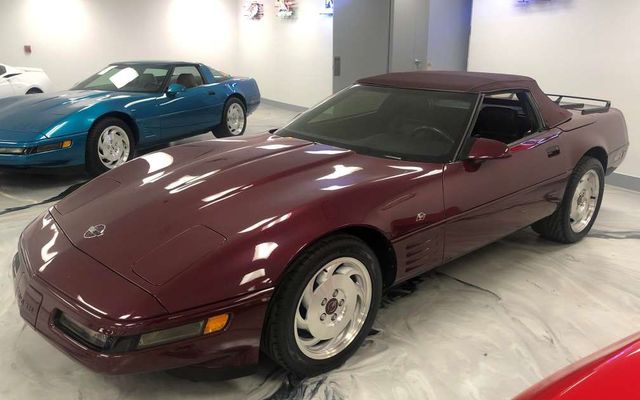
1993 Chevrolet Corvette Convertible 40th Anniversary Edition
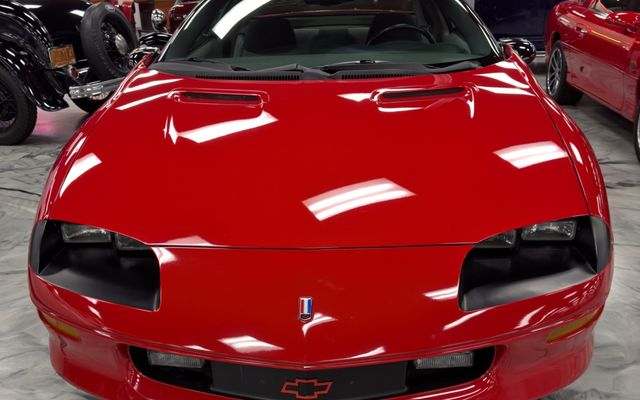
1994 Chevrolet Camaro Z28