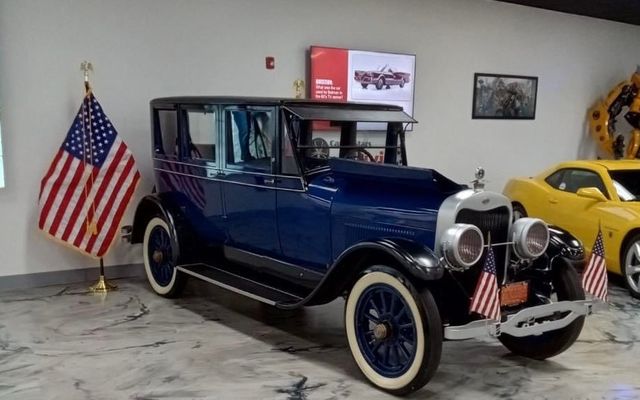
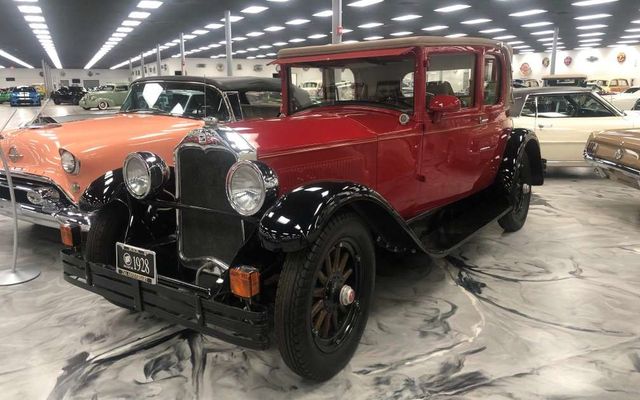
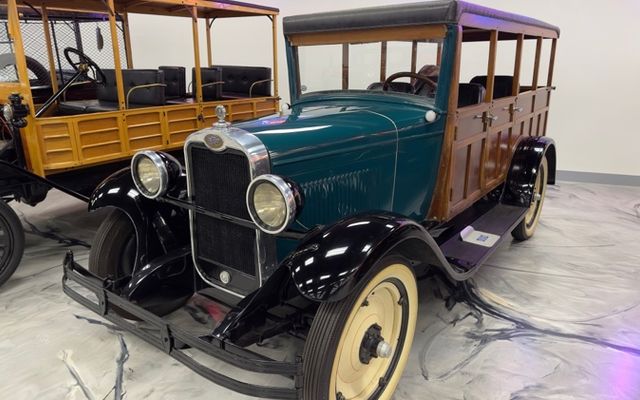
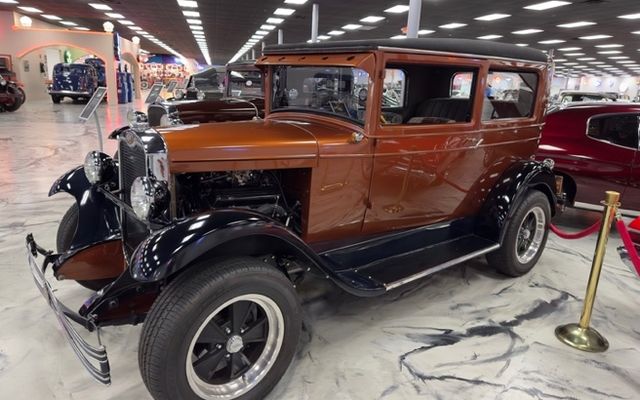
No. 029 of 217
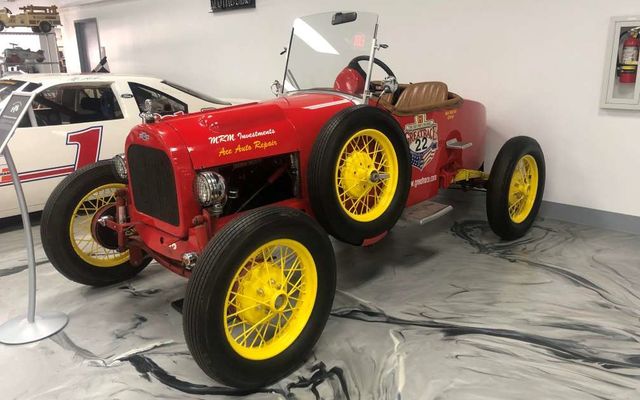
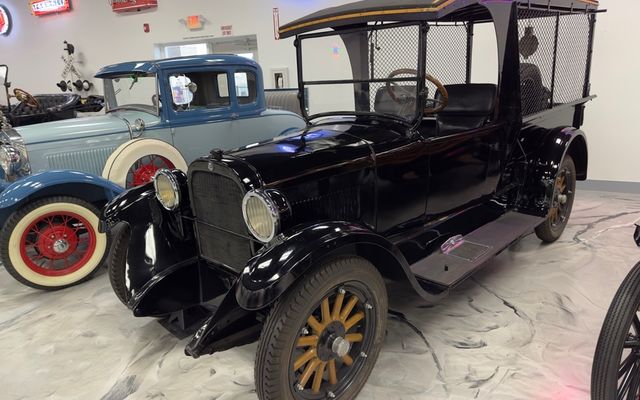
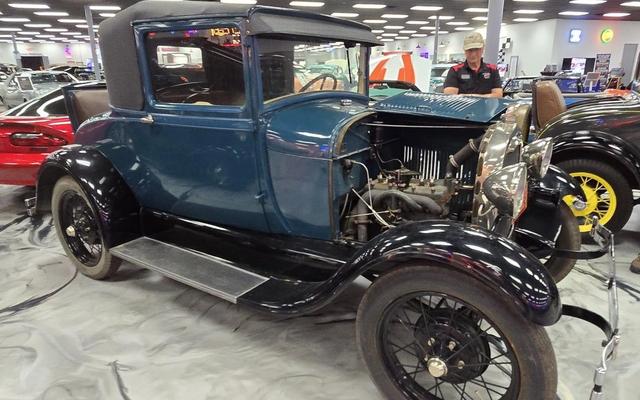
The Ford Model A (also colloquially called the A-Model Ford or the A, and A-bone among hot rodders and customizers) is the Ford Motor Company's second market success, replacing the venerable Model T which had been produced for 18 years. It was first produced on October 20, 1927, but not introduced until December 2. This new Model A (a previous model had used the name in 1903–04) was designated a 1928 model and was available in four standard colors.
By February 4, 1929, one million Model As had been sold, and by July 24, two million. The range of body styles ran from the Tudor at US$500 (in grey, green, or black) to the town car with a dual cowl at US$1,200. In March 1930, Model A sales hit three million, and there were nine body styles available.
Model A production ended in March 1932, after 4,858,644 had been made in all body styles. Its successor was the Model B, which featured an updated inline four-cylinder engine, as well as the Model 18, which introduced Ford's new flathead (sidevalve) V8 engine.
The Model A came in a wide variety of styles including coupes (standard and deluxe), business coupe, sports coupe, roadster coupes (standard and deluxe), convertible cabriolet, convertible sedan, phaetons (standard and deluxe), Tudor sedans (standard and deluxe), town car, Fordors (five-window standard, three-window deluxe), Victoria, town sedan, station wagon, taxicab, truck, and commercial. The very rare special coupe started production around March 1928 and ended in mid-1929.
The Model A was the first Ford to use the standard set of driver controls with conventional clutch and brake pedals, throttle, and gearshift. Previous Fords used controls that had become uncommon to drivers of other makes. The Model A's fuel was situated in the cowl, between the engine compartment's fire wall and the dash panel. It had a visual fuel gauge, and the fuel flowed to the carburetor by gravity. A rear-view mirror was optional. In cooler climates, owners could purchase an aftermarket cast iron unit to place over the exhaust manifold to provide heat to the cab. A small door provided adjustment of the amount of hot air entering the cab. The Model A was the first car to have safety glass in the windshield.
In Europe, where in some countries, cars were taxed according to engine size, Ford in the UK manufactured the Model A with a smaller displacement engine of 2,043 cc (124.7 cu in), providing a claimed output of 28 hp. However, this equated to a British fiscal horsepower of 14.9 hp (compared to the 24 hp of the larger engine) and attracted a punitive annual car tax levy of £1 per fiscal hp in the UK. It, therefore, was expensive to own and too heavy and uneconomical to achieve volume sales, so it was unable to compete in the newly developing mass market while also too crude to compete as a luxury product. European manufactured Model As failed to achieve the sales success in Europe that would greet their smaller successor in Britain and Germany.
205 cubic-inch inline 4-cylinder engine
40 horsepower
Top speed of 65-70 mph
3-speed manual transmission
Double-action hydraulic shock absorbers
4-wheel mechanical brakes
103.5-inch wheelbase
Total of 226,000 Standard Coupes built in 1930
Pre-War Classics / 1916–1941