No. 016 of 217
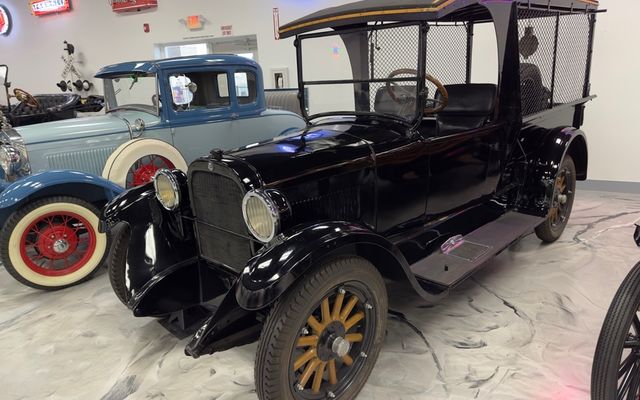
The 1928 Chevrolet Depot Hack Woody was a unique vehicle from the Chevrolet Series AB National lineup, often referred to as the precursor to the modern station wagon.
The depot hack was designed to transport passengers and their luggage from railroad stations to hotels, resorts, or estates, functioning as an early taxi or shuttle. The term “depot hack” derives from its primary use at train depots.
Known as a “woody” due to its wood-bodied construction, the depot hack featured a wooden frame and panels, often custom-built by coachbuilders. These vehicles were open-bodied with multiple seats to accommodate passengers and cargo. The wooden body was typically constructed from materials like maple or mahogany, often restored at significant cost due to wood deterioration over time. The wood gave it a furniture-like aesthetic, a hallmark of early woody vehicles. Many depot hacks were built on a Chevrolet truck chassis sent to specialized coachbuilders (e.g., Hercules, Martin Parry, or Mifflinburg) for custom wooden bodies.
Depot hacks were descendants of horse-drawn express wagons and evolved into the station wagon by the mid-20th century. They were essential in an era when personal automobiles were luxury items, and public transportation like trains was common.
In 1928, Chevrolet was the top-selling automaker, producing over 1.19 million vehicles compared to Ford’s 800,000, partly due to Ford’s Model A production issues. The depot hack was part of Chevrolet’s diverse offerings, which included various truck and utility bodies. The depot hack’s design influenced later station wagons, with the term “station wagon” emerging around the late 1920s. By the 1930s, manufacturers like Ford began producing more standardized woody wagons for individual use.
• Engine: The 1928 model was equipped with a 171 cubic-inch, overhead-valve (OHV) inline 4-cylinder engine, producing 35 horsepower. This was the final year for the 4-cylinder in this model before Chevrolet introduced the six-cylinder “Stovebolt” engine in 1929.
• Transmission: It featured a 3-speed selective manual transmission.
• Brakes: The 1928 model was notable for introducing four-wheel mechanical brakes, a significant advancement over earlier models.
• Wheelbase: The vehicle rode on a 107-inch wheelbase, typical of the Series AB National.
• Wheels: Equipped with 21-inch steel disc wheels, often fitted with 4.50/4.75-21 blackwall tires.
• Weight: Varied due to custom coachwork but generally exceeded 2,500 lbs.
Pre-War Classics / 1916–1941