No. 090 of 217
The 1953 Buick Skylark Convertible was introduced to commemorate Buick’s 50th anniversary. Far more than just another model in the lineup, it was a halo car designed to showcase Buick’s design and engineering capabilities at the height of Detroit’s post-war optimism. Only about 1,690 units were built, making it rare and now highly prized by collectors.
Design & Styling
The Skylark was heavily influenced by Harley Earl, GM’s legendary design chief, and reflected his vision of expressive, custom-inspired automobiles rather than plain commuter cars.
Earl’s philosophy favored motion in form cars that looked fast and luxurious even standing still. The Skylark embodied this with dramatic curves, chrome, and proportions that were more coupe-like than typical convertibles of the era.
Key Styling Features
Lowered Beltline and Windshield: The windshield was chopped about 3 - 4 inches, and the beltline was cut down to give a sleeker, sportier stance — an unusual treatment for such a large American car at the time.
Full Cut-Out Wheel Openings: Both front and rear wheel openings were reshaped and increased in size — a styling cue that would spread to Buicks in 1954.
No VentiPorts: Buick’s signature ventiports (decorative portholes on the front fenders) were omitted to preserve the cleaner, custom look.
Kelsey-Hayes 40-Spoke Wire Wheels: These became one of the Skylark’s most iconic elements — widely regarded as some of the most beautiful wheels of the era.
“Sweepspear” Trim: A chrome side accent that began near the front wheels and swept backward, visually elongating the Skylark’s body.
Inside, the car was richly appointed with leather seats, full carpeting, and instrument panel chrome that reflected an upscale, custom motoring experience.
Engineering & Specifications
Here’s what set the 1953 Skylark apart mechanically:
Chassis & Body
Based on the Buick Roadmaster Convertible but heavily reworked with many hand-fitting operations; only the hood, trunk lid, and some convertible tub sheet metals were shared with the standard Roadmaster.
Engine & Transmission
322 cid “Fireball” V8 — Buick’s first modern overhead-valve V-8, producing about 188 hp and plentiful torque.
Dynaflow Automatic Transmission — Buick’s smooth, turbine–inspired automatic, emphasizing luxury and effortless acceleration.
Electrical / Systems
First Buick year with a 12-volt electrical system, supporting more powerful accessories.
Standard equipment (very extensive for the era)
Power steering, power brakes, power windows, power convertible top
Power seat and power antenna
Selectronic AM radio with power antenna
Whitewall tires and full carpeting
Leather interior (typically two-tone)
Dimensions & Weight
Long and wide like a typical early ’50s American luxury car — nearly 208 in long with a wheelbase of 121.5 in — yet visually lower due to the chopped topline.
Price
Around $4,596 to over $5,000 new — about 50 % more than a well-equipped Roadmaster convertible and roughly equivalent to an average American home at the time.
Marketing & Competitive Strategy
Positioning within GM
The Skylark was part of a strategic campaign across General Motors divisions in 1953 to highlight design leadership and craftsmanship:
GM “Triple Crown” — Alongside Buick’s Skylark, Cadillac had the Eldorado and Oldsmobile had the Fiesta — all limited-series flagship convertibles showcasing the best that each brand had to offer.
Buick’s Skylark outsold both Eldorado and Fiesta, although still selling under 1,700 units.
Buick management’s intent with the Skylark wasn’t to boost volume, but to:
Reinforce Buick’s image as a maker of sophisticated, American luxury.
Showcase new technology — including the new V-8 and high-end standard features.
Generate publicity — the exclusivity and beauty of the Skylark made headlines and drew attention to the Buick brand as a whole.
Market Competition
At launch, the Skylark competed with:
Packard Caribbean: Another limited-run luxury convertible at a similar price point.
Standard luxury convertibles: While few domestic companies offered truly limited, luxury models that combined style, power, and exclusivity like the Skylark did.
On performance and luxury, it attempted to bridge the gap between mainstream Buicks and ultra-luxury marques — not a direct rival to performance sports cars (Jaguar XK120, Mercedes 300SL) but aiming at affluent buyers who wanted American elegance and exclusivity.
Buick Management & Design Mindset
The Skylark wasn’t just another model — it was a statement car. Buick leadership and GM design chief Harley Earl shared several goals:
Celebrate Heritage Through Innovation
Buick’s 50th anniversary was an opportunity to show that tradition and innovation could co-exist. The Skylark combined:
Advanced powertrain technology (new V8)
Luxurious standard features
Styling cues drawn from custom coachwork rather than standard production cars.
Shift Brand Perception
Buick sat between mainstream GM brands and Cadillac. The Skylark helped:
Emphasize youthful sophistication
Counter the image of Buick as stodgy or purely middle-class
Attract attention from affluent buyers and the automotive press
Showcase GM’s Capability
The limited production run mimicked coachbuilt luxury cars, yet leveraged GM’s engineering and assembly strengths — reinforcing GM’s message that its divisions were capable of bespoke-quality automobiles.
Legacy
The 1953 Skylark didn’t lead to huge sales — nor was it intended to — but it did:
Cement the Skylark name in Buick history, later reborn in many forms over decades.
Influence styling cues (later Sweepspears, wheel openings) throughout Buick’s lineup.
Become one of the most cherished classic Buicks among collectors.
Today, original examples in good condition command strong prices at auctions, a testament to its design and place in automotive history.
Production Totals
1953 Buick Skylark Convertible:
Buick built 1,690 units for the 1953 model year, making it the most-numerous of General Motors’ 1953 “special” convertibles (including Cadillac Eldorado and Oldsmobile Fiesta), yet still quite rare by any measure.
The 1953 run was successful relative to its ultra-exclusive pricing and handcrafted nature. It leveraged Buick’s new V8 and bold design to generate prestige rather than profit-centered volume.
1954 Buick Skylark Convertible:
The model continued for just one more year, with only 836 units produced in 1954 before the limited-run convertible was discontinued.
The 1954 model was even rarer — about half the 1953 total — partly because its higher price and the shifting market limited broader sales appeal. It also reflected Buick’s move to base the 1954 Skylark on a smaller or lighter chassis (Century), further differentiating it from the original year’s luxury-focused positioning.
Post-War & Chrome / 1946–1959
More from the collection.
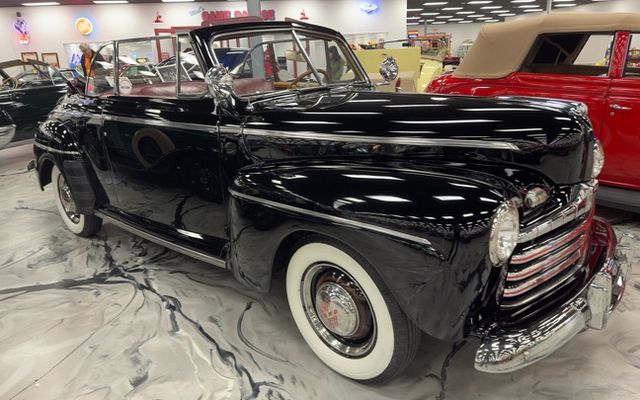
1946 Ford Super De Luxe 2-Door Convertible
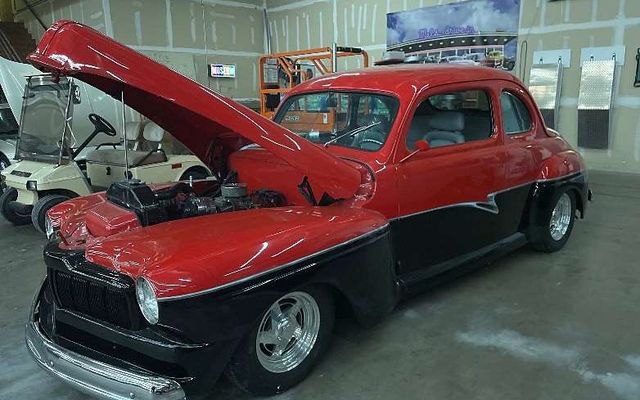
1946 Mercury Eight Coupe Custom
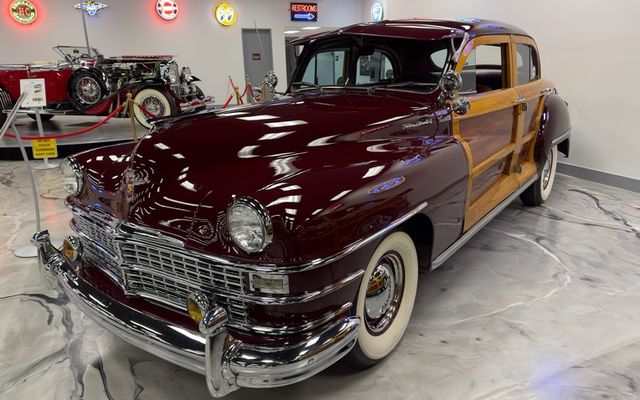
1947 Chrysler Town & Country Sedan
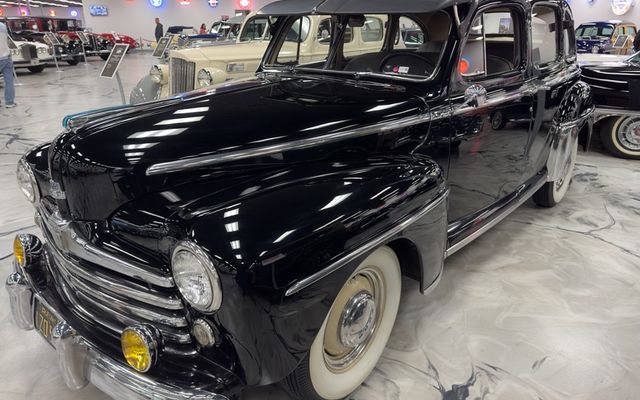
1947 Ford Super Deluxe Fordor
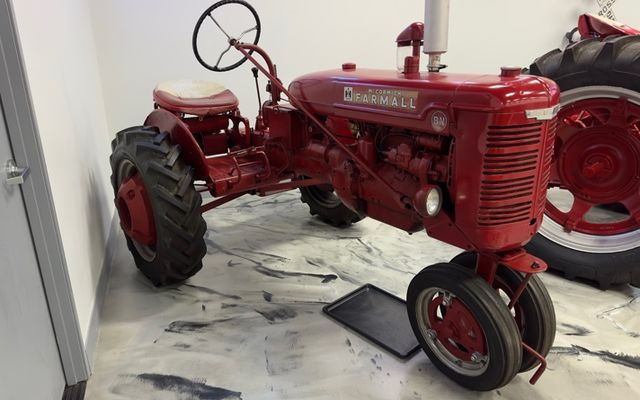
1947 McCormick Farmall BN Culti-Vision Tractor
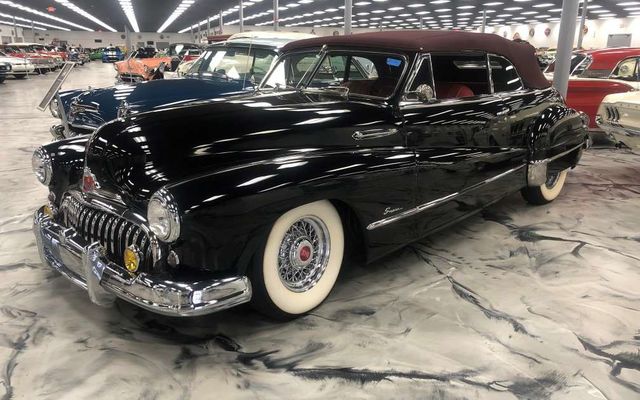
1948 Buick Super Convertible
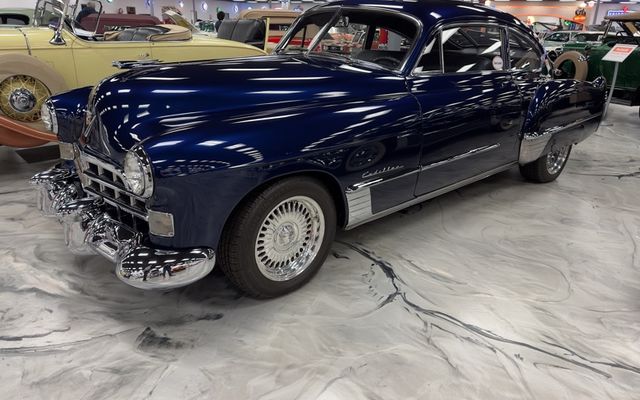
1948 Cadillac Series 62 2-Door Fastback
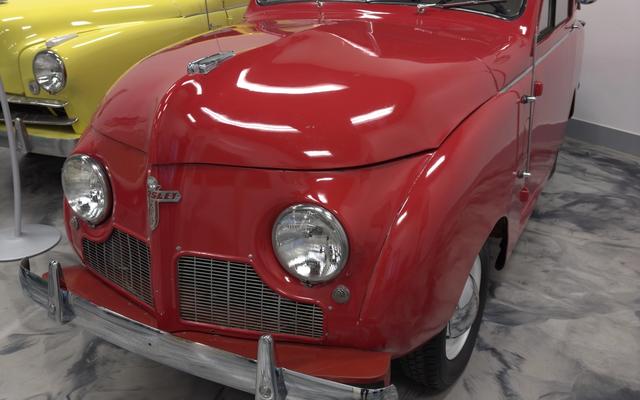
1948 Crosley CC Convertible
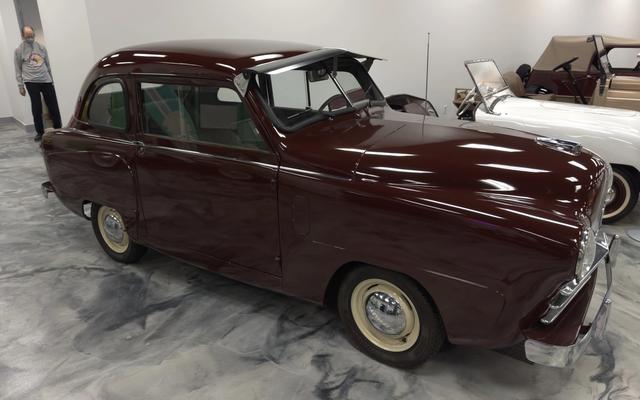
1948 Crosley Super Sedan
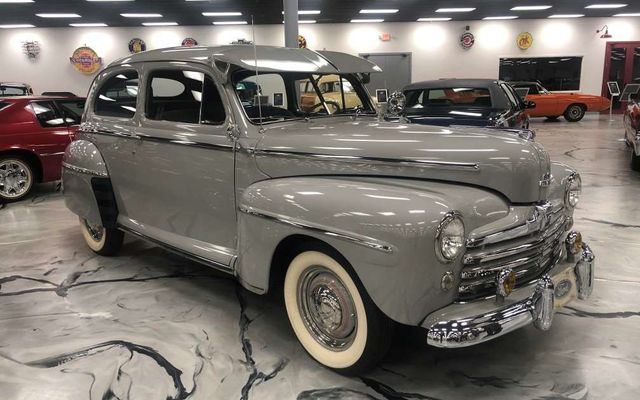
1948 Ford Super Deluxe Sedan