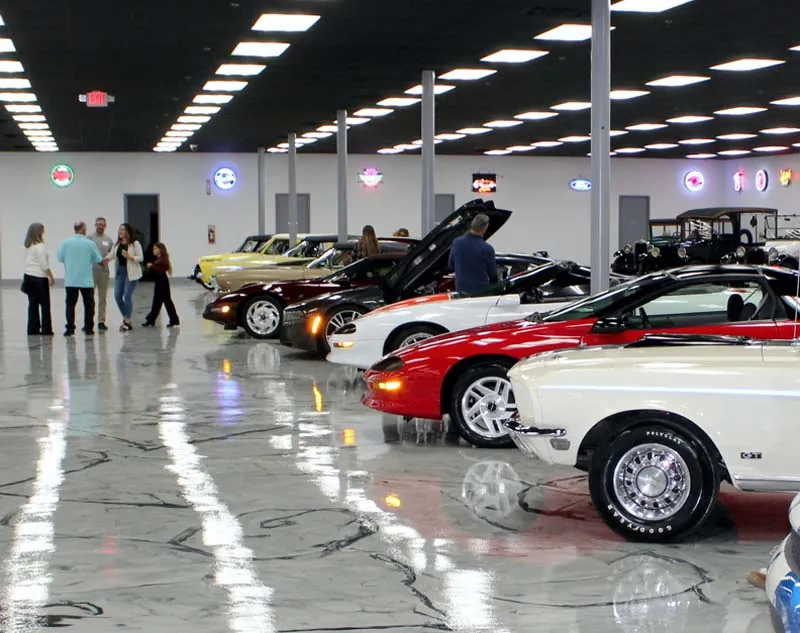
No. 085 of 217
Although this special car was never actually appeared in the popular television sitcom Hogan's Heroes, it was very similar to the cars actually used in the show. which ran for seven years (1965-1971).
Colonel Klink is seen being driven to various locations in a Mercedes 260D staff car. Sometimes it is the standard version, while at other times it is the Pullman limousine version.
The 1951 Mercedes-Benz 170 Da (W136 VI D) was a diesel-powered passenger car produced by Daimler-Benz, significant for its role in post-World War II recovery and its contribution to popularizing diesel engines in passenger vehicles.
Overview
• Production Period: 1950–1952
• Model Designation: 170 Da, internally coded as W136 VI D
• Type: Sedan, chassis for special-purpose bodies, ambulance, and delivery van variants
• Significance: The 170 Da was an evolution of the 170 D, introduced in 1949, and played a key role in making diesel passenger cars socially acceptable. It was economical, reliable, and well-suited for the resource-scarce post-war era, particularly due to the availability of diesel fuel compared to gasoline.
Technical Specifications:
• Engine:
• Type: OM 636 VI, 4-cylinder inline diesel with indirect injection (Vorkammereinspritzung)
• Displacement: 1,767 cc (1.8 liters, tax classification 1,755 cc)
• Bore x Stroke: 75 x 100 mm
• Compression Ratio: 19:1
• Power Output: 40 hp (29 kW) at 3,200 rpm
• Torque: 10.3 mkg (101 Nm) at 2,000 rpm
• Fuel System: Bosch 4-plunger injection pump
• Valve Arrangement: 1 intake, 1 exhaust (overhead), driven by a lateral camshaft via spur gears
• Note: The engine was an enlarged version of the 1.7-liter M136, upgraded in May 1950 for improved performance.
• Transmission:
• Manual, 4-speed, column-mounted gear lever
• Chassis and Suspension:
• Chassis: Oval-tube frame (W136 platform)
• Front Suspension: Independent with double wishbones and coil springs
• Rear Suspension: Swing axle with coil springs
• Brakes: Hydraulic drum brakes, strengthened in 1950
• Shock Absorbers: Telescopic, added in 1950 for improved safety
• Dimensions and Weight:
• Length: Approximately 4,285 mm (sedan)
• Width: 1,584 mm
• Rear Track: Widened in 1950 for better stability
• Weight: Varies by body type (sedan ~1,200–1,300 kg)
• Performance:
• Top Speed: ~100 km/h (62 mph)
• Acceleration: Modest, prioritized economy over speed
• Fuel Consumption: Notably low for the era, a key selling point due to diesel efficiency
• Body Styles and Variants
• Sedan: The primary configuration, a four-door saloon with improved comfort features like larger seats and a wider cabin (50 mm wider than earlier models).
• Special-Purpose Chassis: Available for coachbuilders, used for:
• Ambulances: Built by Lueg in Bochum, officially sold by Daimler-Benz from December 1950.
• Box-Type Delivery Vans: Produced from 1951–1953, including Sindelfingen-bodied versions.
• Pick-Up Waterfalls: Platform trucks and estate cars, often locally assembled (e.g., South Africa’s Morewear Industries for pick-ups).
• 170 D OTP (Offener Tourenwagen Polizei): A rare four-door cabriolet for police use (1951–1952), with a lightweight folding roof and detachable side windows. Approximately 530 units were built for the German Federal Border Police, mostly painted blue despite a “Police Green” requirement. Featured an externally accessible trunk, a first for the 170 series.
• Pick-Up (South Africa): Chassis cabs were exported as semi-knocked-down (SKD) units to South Africa, where Morewear Industries in Germiston fitted load boxes for use as commercial vehicles. These “half-cars” were popular among businessmen and farmers.
Historical Context and Impact:
• Post-War Role: Introduced at the 1949 Technical Export Fair in Hanover, the 170 Da was part of Daimler-Benz’s post-war recovery. The diesel engine’s fuel efficiency and reliability made it a hit, especially as gasoline was scarce. It was widely used as a taxi and for commercial purposes.
• Diesel Pioneer: The 170 Da built on the legacy of the 1936 Mercedes-Benz 260 D, making diesel passenger cars mainstream. Its success laid the groundwork for Mercedes-Benz’s leadership in diesel technology. By 1953, 33,823 diesel 170 D variants were sold.
• Production Numbers: In 1949, Daimler-Benz produced 17,164 units (170 V, 170 D, 170 S combined), rising to 33,906 in 1950 and 38,350 in 1951, with the 170 D and Da being major contributors.
• Market Positioning: Priced at 9,850 DM for the sedan, it competed with luxury models like the Opel Kapitän, appealing to business owners and professionals.
• Legacy: The 170 Da’s rugged design and diesel efficiency made it a symbol of resilience. Its platform (W136) was Mercedes-Benz’s top seller until the 1953 introduction of the modern “Ponton” 180 (W120), which rendered the 170 series outdated.
Collectability and Modern Appeal
• Rarity: Variants like the OTP and South African pick-ups are particularly rare and sought after by collectors, especially in markets like South Africa.
• Restoration Notes: Restored examples, like a 170 D OTP in the U.S., feature period-correct details (e.g., white-wall tires, vintage Mercedes-Benz hubcaps). Modern upgrades, such as additional gauges for oil pressure and water temperature, are common for reliability.
Market Value: Prices for 1951 170 Da models vary:
• Sedan: ~€47,890–109,000 (condition-dependent)
• Special variants (e.g., OTP, pick-up): Higher due to rarity
• Example: A 1951 170 S (petrol) sold for €139,000.
Cultural Significance:
The 170 Da is celebrated for its role in Mercedes-Benz’s post-war revival and its engineering simplicity, offering a tactile, vintage driving experience with the distinctive diesel clatter.
Sources
• Information compiled from automotive history archives, including Mercedes-Benz’s public archive and enthusiast resources.
• Note: Some specifications (e.g., exact weight, fuel consumption) vary slightly across sources due to limited historical data and body type differences.
Post-War & Chrome / 1946–1959
More from the collection.
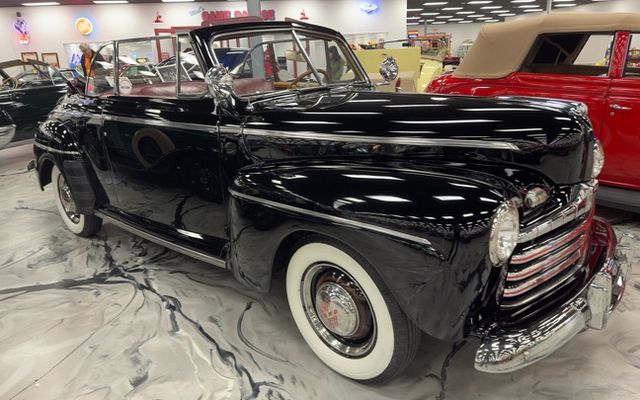
1946 Ford Super De Luxe 2-Door Convertible
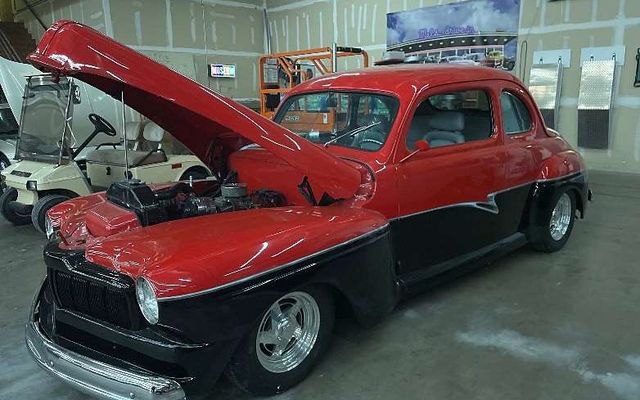
1946 Mercury Eight Coupe Custom
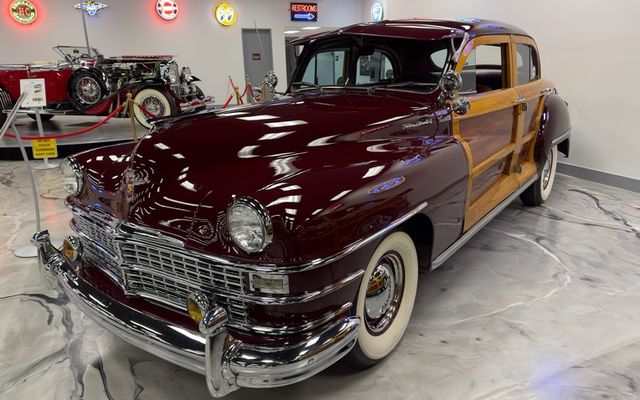
1947 Chrysler Town & Country Sedan
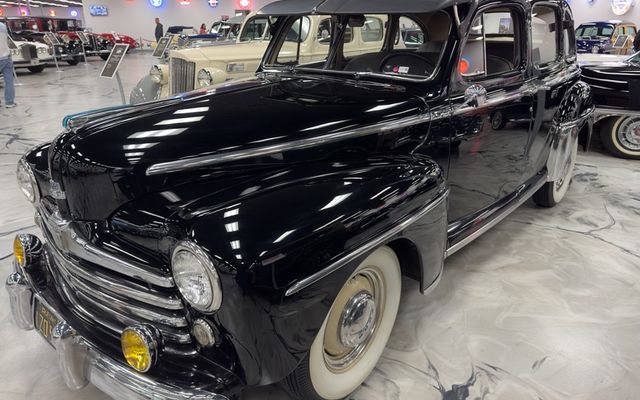
1947 Ford Super Deluxe Fordor
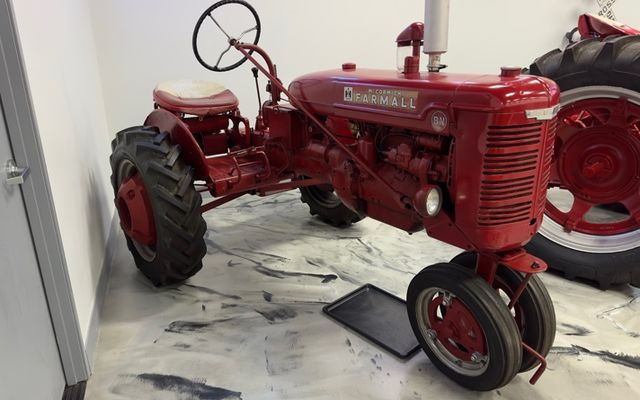
1947 McCormick Farmall BN Culti-Vision Tractor
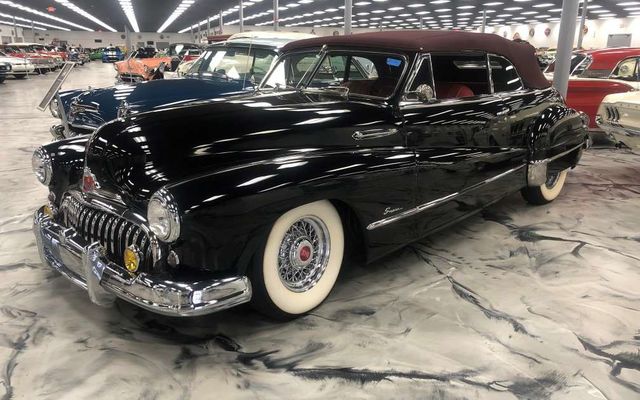
1948 Buick Super Convertible
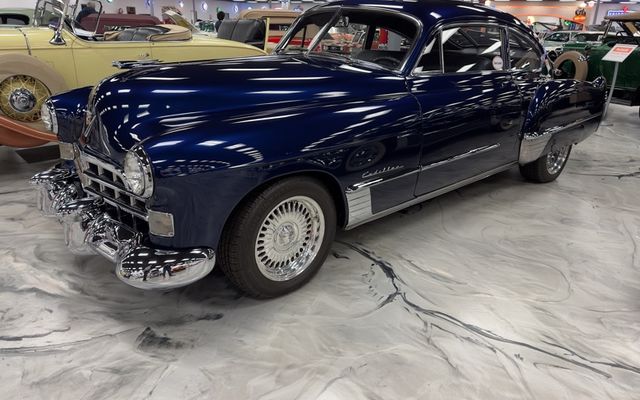
1948 Cadillac Series 62 2-Door Fastback
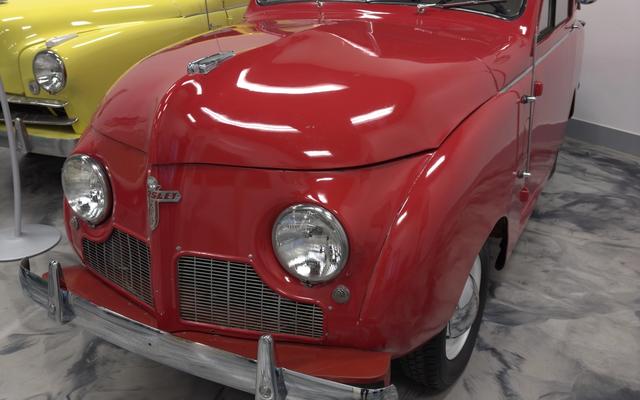
1948 Crosley CC Convertible
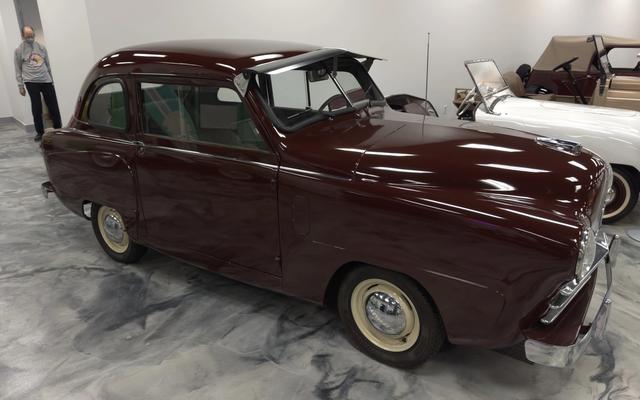
1948 Crosley Super Sedan
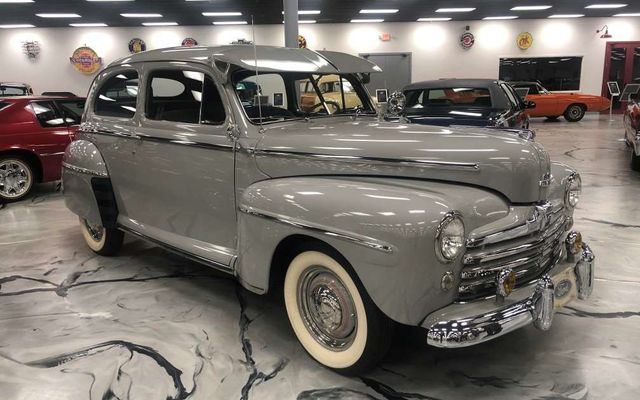
1948 Ford Super Deluxe Sedan