No. 081 of 217
Designed by Eugene Gregorie and Ross Cousins, the Ford station wagon marked the first transition away from the full "woodie". In place of a complete wooden body aft of the firewall, the 1949 Ford station wagon was designed with a steel roof, rear fenders, and tailgate fra. Wood construction remained for the side bodywork and upper and lower tailgate (using mahogany plywood trimmed by maple or birch). Sharing its body with Mercury, the Ford station wagon was offered in Custom trim. To reduce noise and improve sealing, the station wagon was offered with two doors instead of four; however, three seats were used, allowing eight-passenger seating.
For the 1950 model year, Ford renamed its model lines; initially, the station wagon was a Custom Deluxe with the all new "Country Squire" name introduced in early 1950. Several revisions were made for 1950 to improve functionality and capability. The second and third-row seats were redesigned, allowing their removal without tools. In another change, the Country Squire also received heavier-duty rear-suspension, wider tires, and a larger fuel tank over Ford sedans.
Following its introduction, the Country Squire underwent several revisions distinct from Ford sedans. For 1950, the spare-tire cover was deleted; in April 1950, the lower tailgate was redesigned, changing from all-wood construction to steel construction (with wood trim). For 1951, the Country Squire retained the dashboard of the 1950 Ford (with the 1951 steering column).
As a true "woodie", assembly of the Country Squire was labor-intensive, requiring completion at three assembly plants. Initial assembly of the steel body was completed at the Dearborn Assembly Plant, with the incomplete body shipped to the Iron Mountain plant for the fitment of wood paneling; upon completion, the bodies were shipped back to various Ford assembly facilities for final assembly (mounting to frames, fitment of interiors).
For 1951, Ford outsourced final assembly of the Country Squire, contracting Ionia Body Company (an assembler of wood-bodied station wagons for General Motors).
During its production, the first-generation Country Squire was available with engines shared with Ford sedans. The standard engine was a 226 cubic-inch 95 hp H-series inline-6, with a 239 cubic-inch 100 hp Flathead V8. For 1950, a 3-speed manual was standard, with a 3-speed Ford-O-Matic automatic becoming an option in 1951.
The 1951 Country Squire was the last model where actual wood was used on the body. The genuine wood body panels were manufactured at the Ford Iron Mountain Plant in the Michigan Upper Peninsula from lumber owned by Ford Motor Company. For 1952, all-steel bodies replaced wooden body structures to reduce production costs. Subsequently, exterior body trim consisted of simulated woodgrain.
The base price of the 1951 Country Squire was $2,021
5.7-liter crate engine
300 horsepower
MSD ignition (making ten times the spark)
3-speed transmission
4-wheel disc brakes with power assist for better stopping
Post-War & Chrome / 1946–1959
More from the collection.
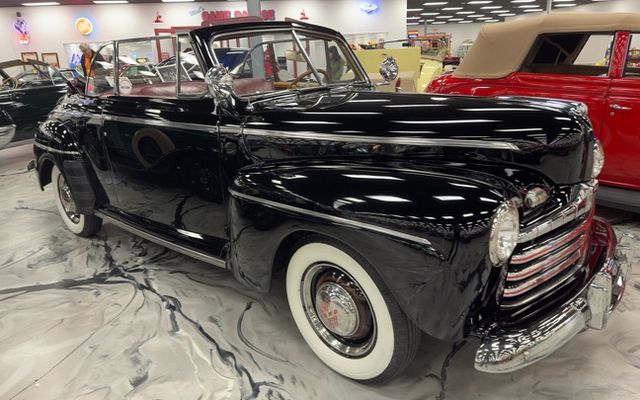
1946 Ford Super De Luxe 2-Door Convertible
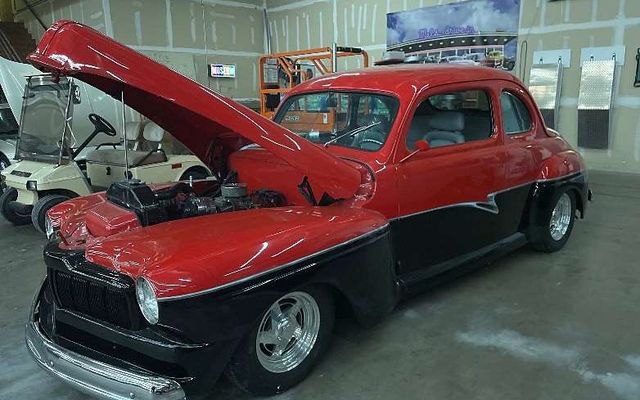
1946 Mercury Eight Coupe Custom
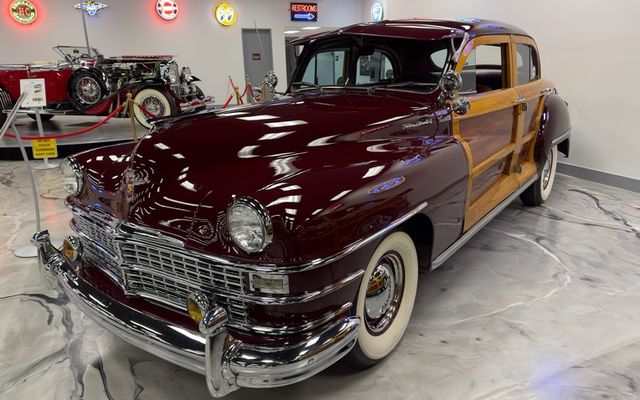
1947 Chrysler Town & Country Sedan
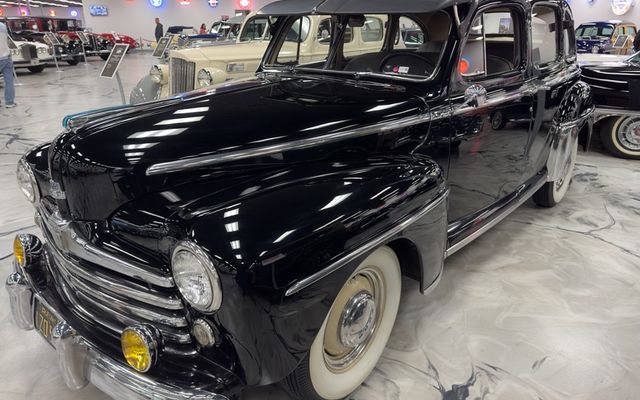
1947 Ford Super Deluxe Fordor
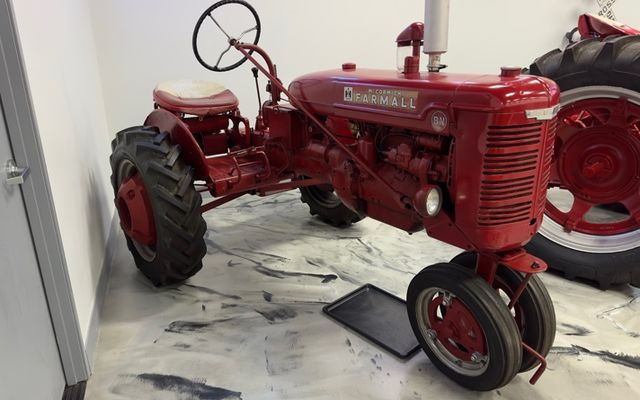
1947 McCormick Farmall BN Culti-Vision Tractor
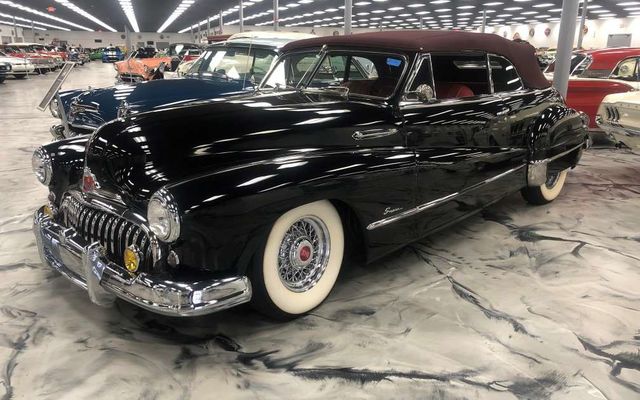
1948 Buick Super Convertible
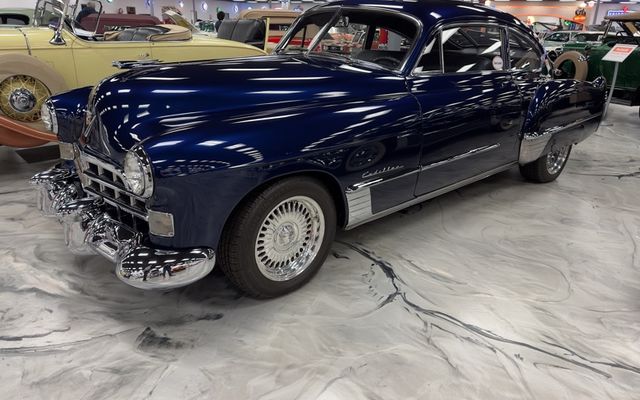
1948 Cadillac Series 62 2-Door Fastback
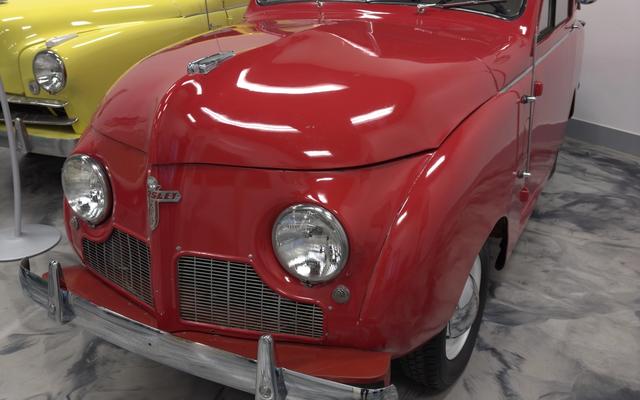
1948 Crosley CC Convertible
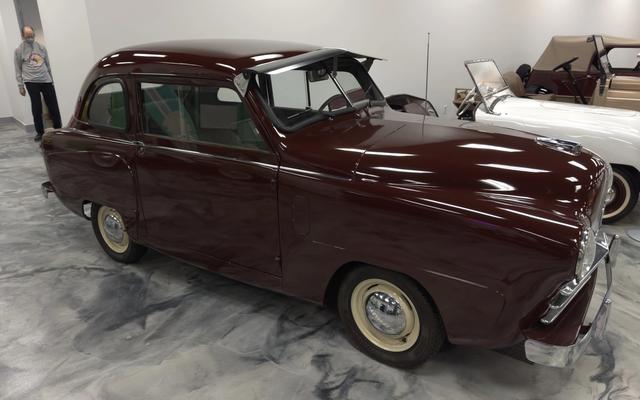
1948 Crosley Super Sedan
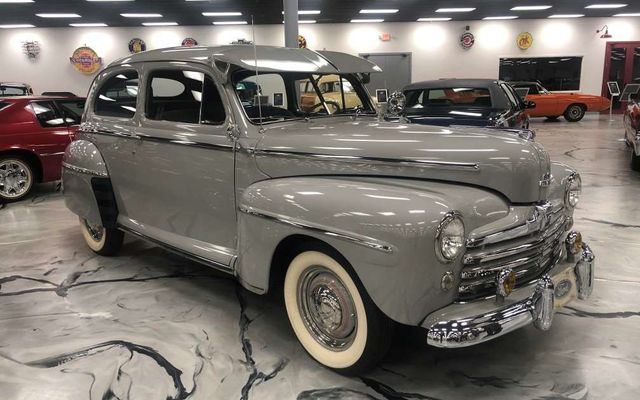
1948 Ford Super Deluxe Sedan