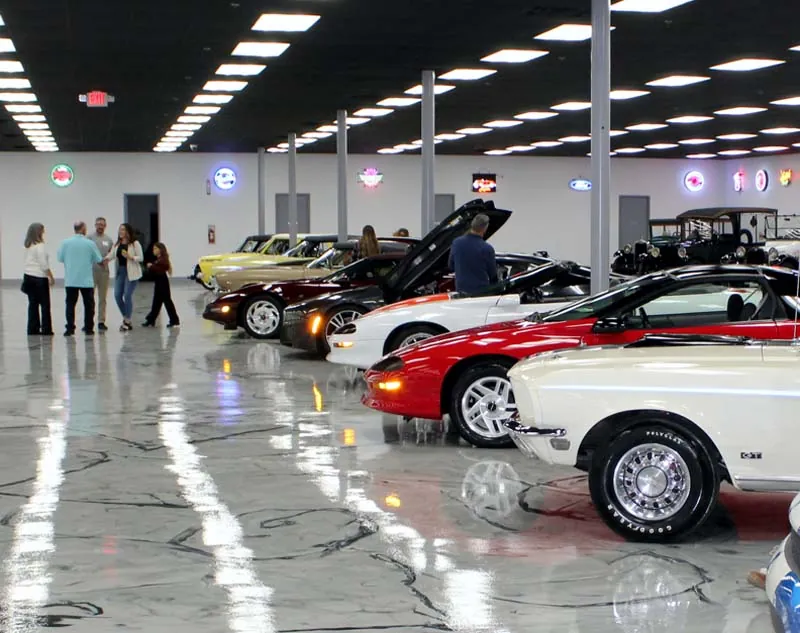
No. 074 of 217
The 1949 Ford is a line of cars produced by Ford from the 1949 to 1951 model years. The successor to the prewar 1941 Ford, the model line was the first full-size Ford designed after World War II, becoming the first Ford car line released after the deaths of Edsel Ford and Henry Ford. From 1946 to 1948, each of the American Big Three concentrated on the restoration of car production, offering updated versions of their 1941-1942 model lines. Released in June 1948, the 1949 Ford was the first major "postwar" American car line, beating Chevrolet to market by six months and Plymouth by nine.
In response to its design, the model line would be called the "Shoebox Ford", denoting its slab-sided "ponton" design. While the design theme had been in use since the late 1920s to streamline automobiles, the 1949 Ford marked its widest-scale use, removing running boards entirely and integrating front and rear fenders into a single, smooth body form.
Designed by artist Frank L. Engle, the Ford crest emblem made its first appearance for 1950; in various forms, the emblem was used through the 1991 model year. In other firsts, this generation marked the first use of keyed ignition and the first automatic transmission option in Ford vehicles.
The Ford adopted a drop-center ladder frame; to further modernize its design, the transverse-leaf front and rear suspension (a feature in use since the Model T) was retired, replaced by a coil spring independent front suspension and longitudinal rear leaf springs. The torque tube driveshaft was replaced by a more universally-used Hotchkiss drive shaft.
Carried over from the previous generation, a 226 cubic-inch L-head inline-6 was the standard engine with an optional 239 cubic-inch Flathead V8.
The 1949 Ford debuted at a gala at the Waldorf-Astoria Hotel in New York City in June 1948, with a carousel of the new model line complemented by a revolving demonstration of the new chassis; the new integrated steel structure was advertised as a "lifeguard body". Though wood was again used for external body panels, the "woody" station wagon adopted a steel inner body structure. To increase its body rigidity, the frame of the convertible received an "X member" reinforcement.
Alongside the redesign of the car, Ford updated its model nomenclature for 1949. The previous Custom, De Luxe, and Super De Luxe names were replaced by new Standard and Custom trims, with Tudor and Fordor sedans (two-door and four-door, respectively), fastback Club Coupe and Business Coupe (the latter, rear seat delete), Convertible Club Coupe, and two-door Station Wagon styles. In the center of the "Bullet-nose" grille emblem, Ford embossed either a "6" or an "8" on top of a red circle, denoting the fitment of an inline-6 or V8 engine.
For 1949, Ford returned to first place among American manufacturers, selling 1,118,740 Ford cars. While bolstered by an extended 16-month model year, the 1949 Ford was met with success.
239 cubic-inch V-8 engine
Downdraft carburetor
Oil bath air cleaner
3-speed transmission
Column-mounted gear shift
Third row seat
Electronic windshield wipers
Clock and radio
Post-War & Chrome / 1946–1959
More from the collection.
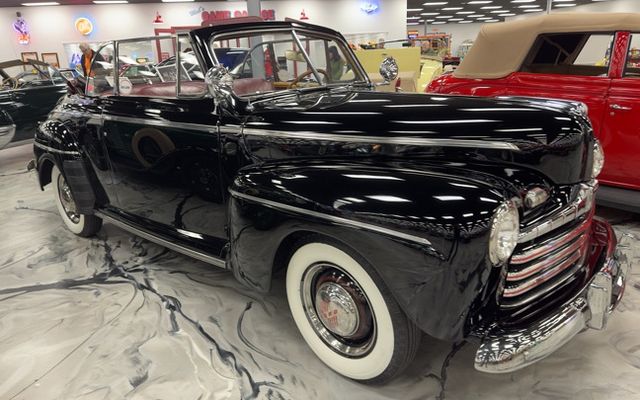
1946 Ford Super De Luxe 2-Door Convertible
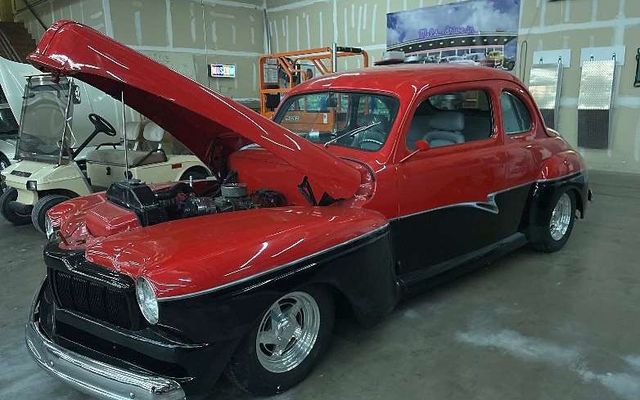
1946 Mercury Eight Coupe Custom
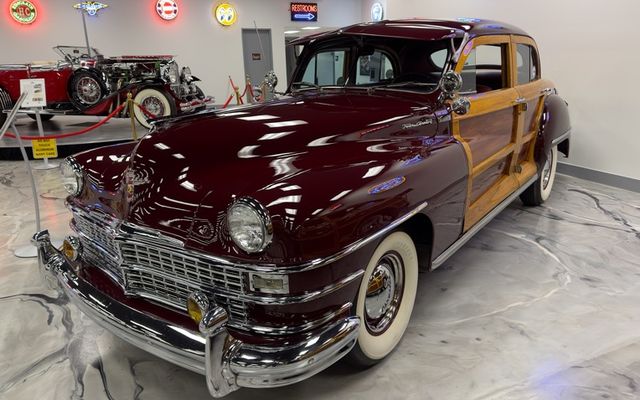
1947 Chrysler Town & Country Sedan
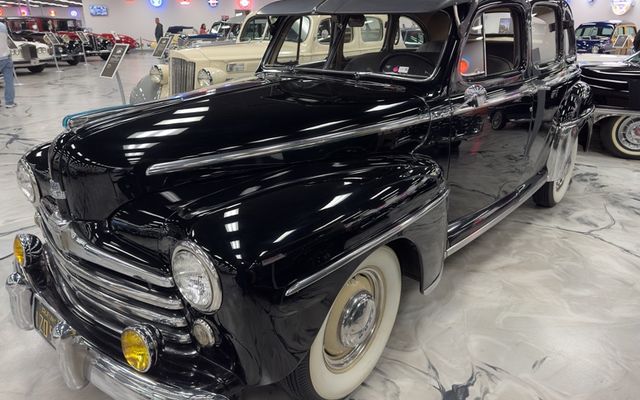
1947 Ford Super Deluxe Fordor
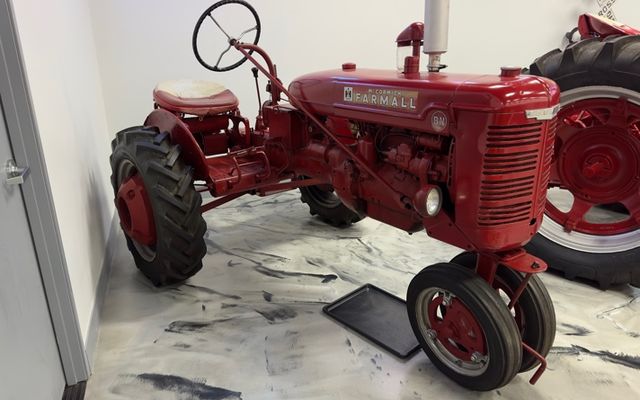
1947 McCormick Farmall BN Culti-Vision Tractor
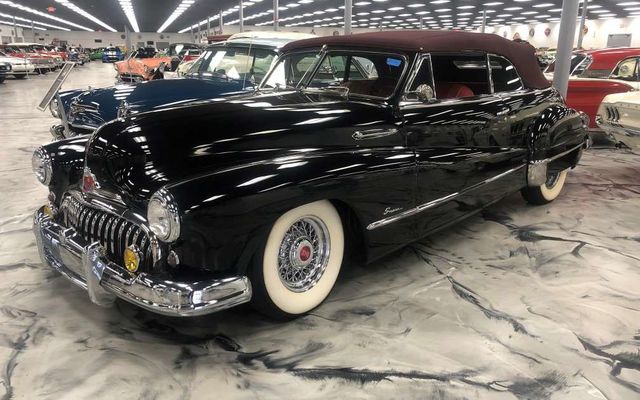
1948 Buick Super Convertible
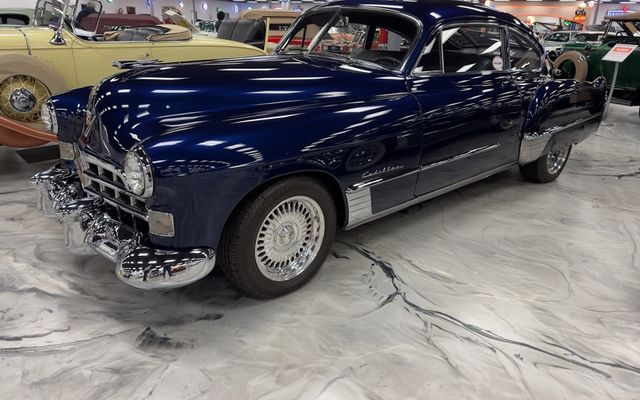
1948 Cadillac Series 62 2-Door Fastback
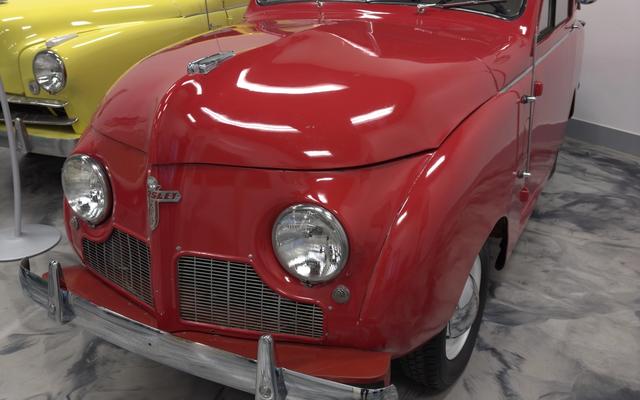
1948 Crosley CC Convertible
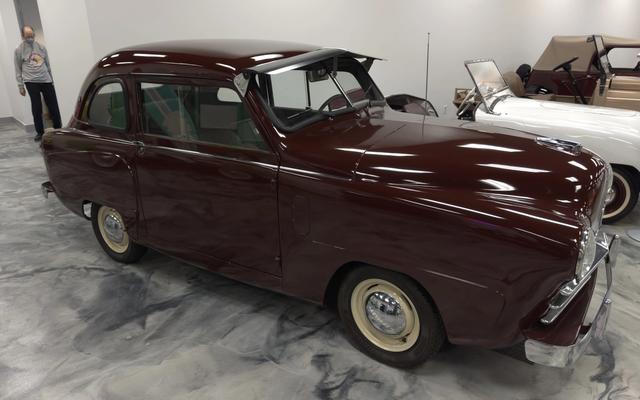
1948 Crosley Super Sedan
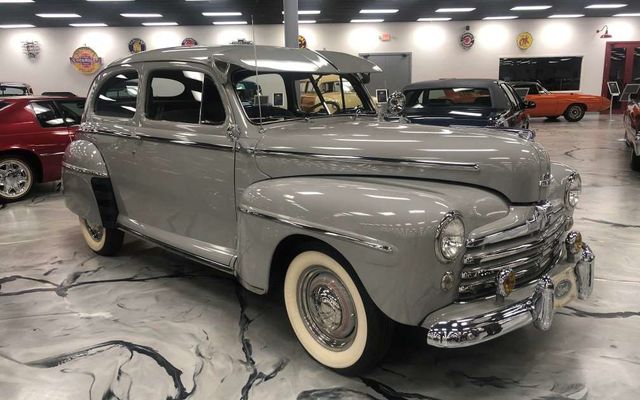
1948 Ford Super Deluxe Sedan