No. 164 of 217
1978 was the Corvette's 25th anniversary, and all 78s featured silver anniversary nose and fuel door emblems. A new fastback rear window was the most dramatic and noticeable styling change, giving the ten-year-old C3 Corvette body style a fresh lease on life. The fixed-glass fastback benefited both aerodynamics and increased the usable luggage space behind the seats while improving rearward visibility in the bargain. A shade was installed that could be pulled forward to cover the rear compartment to protect cargo and carpet against the sun. The tachometer and speedometer were redesigned to match the new “aircraft styled” center console and gauge cluster first seen the previous year. Redesigned interior door panels were also new as well as an actual glove box was added in front of the passenger seat, replacing the map pockets of previous years. Available options now included power door locks, a power antenna, dual rear speakers and a CB radio. The optional convenience group, introduced the previous year, now included intermittent (delay) wipers, floor mats, and the passenger side vanity mirror was an upgraded illuminated unit. The base L48 engine generated 185 hp (138 kW); Those destined for California or high altitude areas produced 175 hp (130 kW). Gone was the chrome-plated ignition shielding over the distributor, replaced with a metal-lined black plastic unit. The single-snorkel air intake used since 1976 was changed to a dual-snorkel set-up on L82 equipped cars helping to boost that output to 220 hp (164 kW). L82 engines were also now fitted with an aluminum intake manifold which saved 24 pounds compared to the cast iron unit of previous years. The Corvette converted to metric tires with the P225/70R15 as standard. Wider P255/60R15 tires were available as an option and required fender trimming from the factory for clearance. The fuel tank capacity increased from 17 gal to 24 gal on all cars. To make room for the larger tank, a smaller (P195/80D15) space saver spare tire was utilized.
Two special editions were offered to celebrate Corvette's 25th year. Before he retired, Bill Mitchell had suggested a Silver Anniversary model in his favorite color - silver, appropriately enough - and it appeared as the $399 B2Z option package. The first two-tone paint option offered since 1961, it presented silver over a gray lower body with a separating pinstripe, plus aluminum wheels and dual "sport" outside mirrors as mandatory options, which added another $380 to the cost. 6,502 Indy 500 Pace car replica editions were produced featuring Black/silver two-tone paint, front and rear spoilers, mirror-tint roof panels and contoured sport seats. Reviewers praised the car's classic strengths including its impressive straight-line numbers, especially an L48/automatic's 7.8 second 0-60 mph time and top speed of 123 mph (198 km/h), and noted its more refined, less rattling ride. On the other hand, they continued to note its weaknesses, like a rear-end that tended to step out during sharp maneuvers and a cabin that was still cramped and uncomfortable.
Road & Track took a 1978 L82 to 60 mph (97 km/h) in just 6.6 seconds, 127 mph (204 km/h) flat out, and covered the quarter-mile in 15.3 seconds at 95 mph.
1979 saw the crossed-flag emblems on the nose and fuel door revert to those seen on the '77 model. Three popular features introduced on the '78 pace car replicas made it into this year's production: the new bucket seats, the front and rear spoiler package, and the glass roof panels. The new lightweight “high back” seats were made standard equipment. The new seats had better side bolster, provided easier access to the rear storage area, and the seat pair resulted in a weight reduction of about 24 pounds. The bolt-on front and rear spoilers were offered as an option and nearly 7,000 cars were ordered so equipped. Functionally, the spoilers decreased drag by about 15% and increased fuel economy by about a half-mile per gallon. A bigger hit were the glass mirror-tint roof panels, now a regular option, with nearly 15,000 cars so fitted despite their costing $365. All T-tops were now wired into the standard anti-theft alarm system. Tungsten-halogen high-beam headlights became standard as did an AM-FM radio, and for the first time a cassette tape player could be added as a $234 option.[38] Heavy duty shock absorbers could now be ordered without the full Gymkhana suspension. An auxiliary electric engine cooling fan was first installed, but only on L82 equipped cars with air conditioning. Rocker panels and rear window trim were painted black. Output for all engines increased due to new "open flow" mufflers. The dual-snorkel air intake introduced on L82 cars the previous year was now fitted to all cars and the base engine now generated 195 hp (145 kW). The optional L82 engine increased to 225 hp (168 kW). This was the final year a manual gearbox could be ordered with the L82 engine. This was also the last year for the M21 close-ratio 4-speed, a gearbox that, as in previous years, required the optional L82 engine. A wide-ratio 4-speed was available for all cars. Noteworthy is that about 82% of the cars were ordered with manual transmissions in 1968. In '79, less than 20% of the cars were delivered with manual gearboxes.[10] This year reached an all-time high in Corvette popularity. Production hit its peak in 1979 at 53,807, a record that stands to this day.
350 cubic-inch L48 V-8 engine
220 horsepower
3-speed automatic transmission
98-inch wheelbase
Muscle & Speed / 1960–1979
More from the collection.
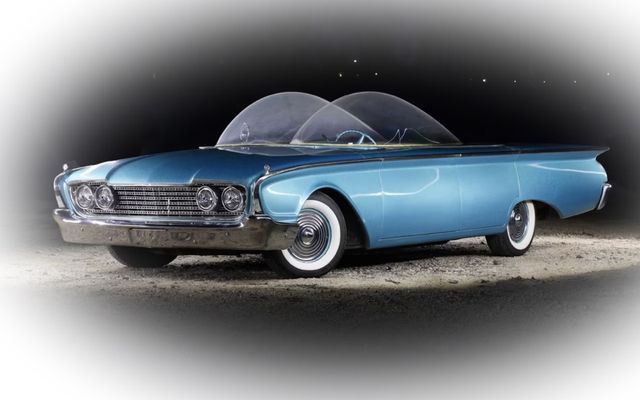
1960 Ford Fairlane “The Spaceliner” Custom Concept
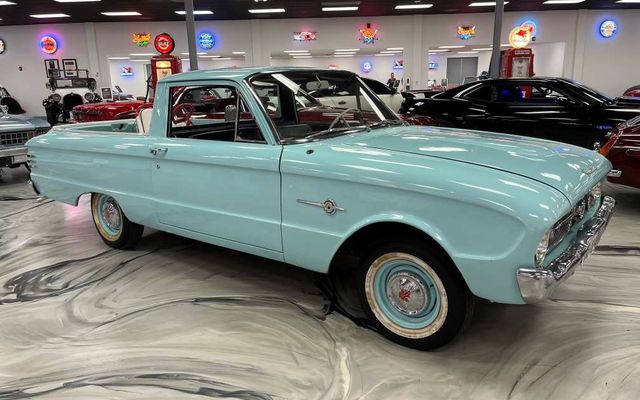
1960 Frontenac Falcon Ranchero
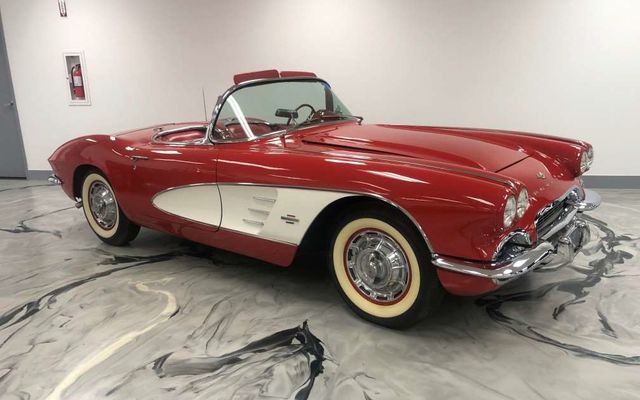
1961 Chevrolet Corvette C1 Convertible
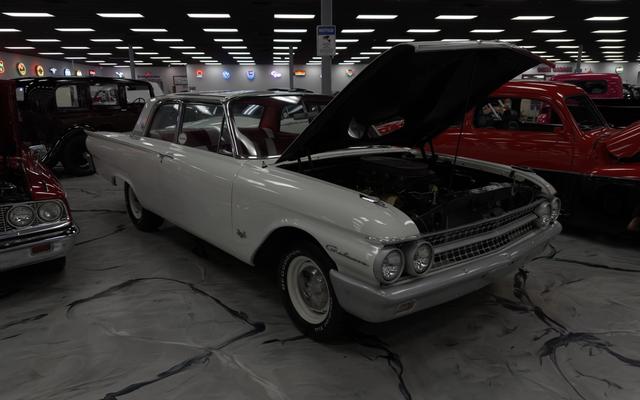
1961 Ford Galaxie Club Sedan
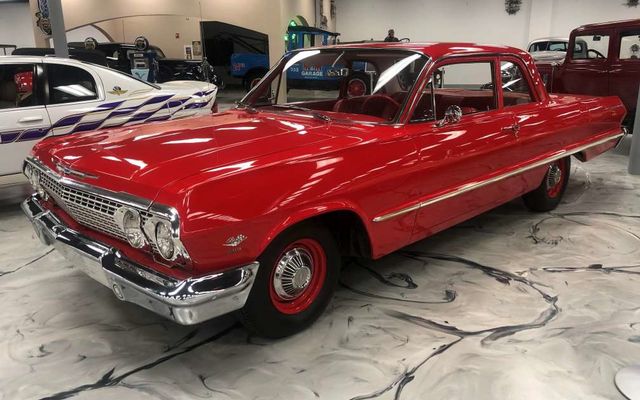
1963 Chevrolet Bel Air 5th Gen.
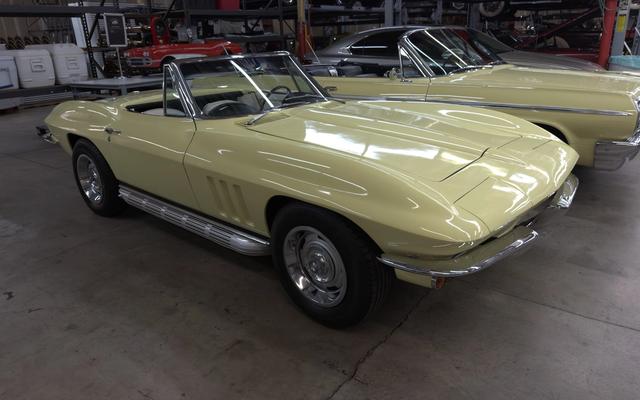
1963 Chevrolet Corvette Convertible
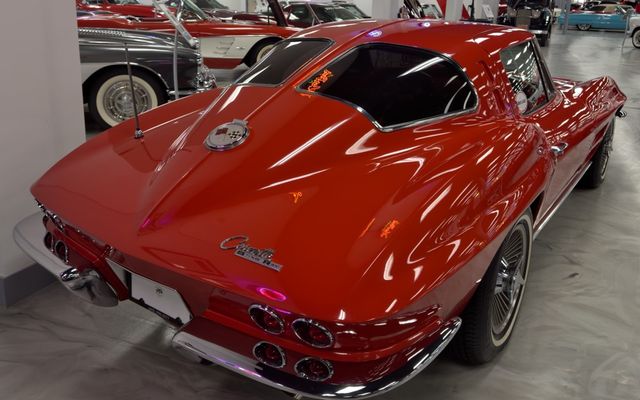
1963 Chevrolet Corvette Split Window C2
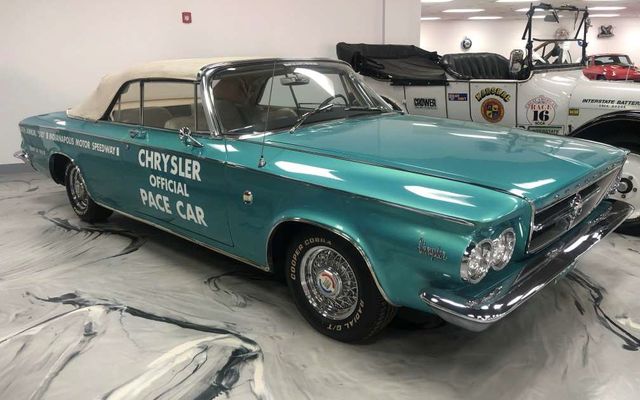
1963 Chrysler 300 Pace Setter Convertible
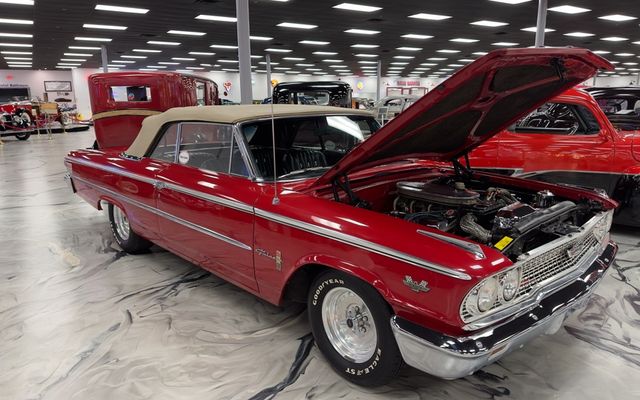
1963 Ford Galaxie 500/XL Convertible
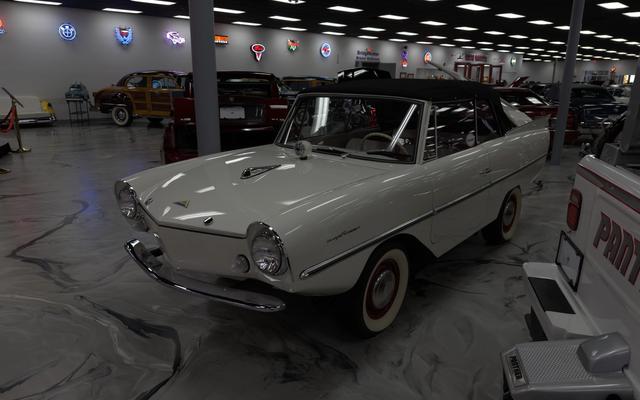
1964 Amphicar Model 770