No. 117 of 217
The 1963 Chevrolet Corvette, specifically the Split Window Coupe, is an iconic American sports car from the second generation (C2) of Corvettes, produced from 1963 to 1967. Known as the “Sting Ray,” the 1963 model introduced a bold new design and significant engineering advancements. Below are details on its design, engineering, and historical context.
The most distinctive feature of the 1963 Corvette Coupe is its rear split window, a one-year-only design. The vertical divider bar in the rear window gave the car a unique aesthetic but was discontinued in 1964 due to visibility concerns and cost.
Designed under Bill Mitchell and styled by Larry Shinoda, the C2 Corvette drew inspiration from Mitchell’s 1959 Stingray racer and earlier concepts like the 1957 Q-Corvette. The sleek, aggressive look featured; Pop-up headlights (a Corvette first), A fastback coupe body with a tapered, boat-tail rear, Sharp, angular lines and a low profile for a futuristic, aerodynamic appearance and a Fiberglass body, continuing Corvette’s tradition of lightweight composite materials.
The interior was driver-focused with a dual-cowl dashboard, circular gauges, and a sporty steering wheel. Options included leather upholstery and air conditioning, though the latter was rare. The design aimed to blend European-inspired aesthetics (like Jaguar’s E-Type) with American muscle, targeting both performance enthusiasts and style-conscious buyers.
The 1963 Corvette introduced an all-new ladder-type frame, replacing the C1’s X-frame, improving rigidity and handling. Independent rear suspension (a major leap over the C1’s solid axle) used a transverse leaf spring, differential-mounted half-shafts, and control arms, enhancing cornering and ride quality. Front suspension featured unequal-length A-arms and coil springs.
Engines Options:
Base engine: 327 cubic-inch (5.4L) V8 producing 250 horsepower.
Optional engines:
L75: 300 hp.
L76: 340 hp with a high-performance carburetor.
L84: 360 hp with Rochester fuel injection (known as “Fuelie”), a rare and sought-after option.
All engines were paired with either a 3-speed manual, 4-speed manual, or 2-speed Powerglide automatic transmission.
Performance:
Top speed ranged from 130-150 mph depending on the engine and gearing.
0-60 mph times were around 5.8-6.9 seconds, competitive with European sports cars.
Braking: Standard four-wheel drum brakes, with optional sintered-metallic linings for better performance (disc brakes arrived in 1965).
Innovations:
Hidden windshield wipers for cleaner aerodynamics.
Optional 36-gallon fuel tank for endurance racing (primarily for convertibles).
Improved weight distribution (near 50/50) due to the new chassis and rear suspension.
Historical Context
The C2 was a response to growing competition from cars like the Ford Thunderbird and European sports cars. Chevrolet’s chief engineer, Zora Arkus-Duntov, known as the “Father of the Corvette,” played a key role in pushing for performance enhancements to make the Corvette a true sports car. The 1963 Split Window became an instant classic due to its striking design and performance. It debuted during an era of automotive optimism, capturing the spirit of the 1960s with its blend of style and power. Only 21,513 Corvettes were built in 1963 (10,594 coupes and 10,919 convertibles). The split window’s one-year production makes it highly collectible today.
The C2 set the tone for future Corvettes as performance icons. The split window’s rarity and unique design have made it a favorite among collectors, with pristine or restored examples fetching $100,000-$200,000 or more at auctions.
Fun Facts
The split window was inspired by aircraft and marine designs, reflecting Bill Mitchell’s fascination with organic, flowing shapes.
The 1963 Corvette was the first to carry the “Sting Ray” name, spelled with a space (later Stingray).
Early prototypes had a four-piece rear window, but the two-piece split window was chosen for production.
In 1963, Chevrolet produced 10,594 split-window Corvette coupes as part of the total production of 21,513 Corvettes (which included both coupes and convertibles). The split-window design was exclusive to the 1963 model year, making these coupes particularly iconic and collectible.
The base price for a 1963 Chevrolet Corvette coupe was $4,257. The convertible model had a slightly lower base price of $4,037. Prices varied depending on optional equipment, such as the L84 fuel-injected 327/360 HP engine, factory air conditioning (which added $412.80), or the Z06 package, which could push the cost significantly higher.
For context on modern pricing, well-maintained 1963 split-window Corvettes in excellent condition can sell for $100,000 to over $300,000 today, depending on options, condition, and provenance (e.g., matching numbers, rare colors, or specific features like the L84 engine). For instance, a documented, award-winning example was listed for $269,500, and another with a rare fuel-injected engine sold for $295,000. The last split-window Corvette produced is estimated to be worth $500,000 or more at auction.
Muscle & Speed / 1960–1979
More from the collection.
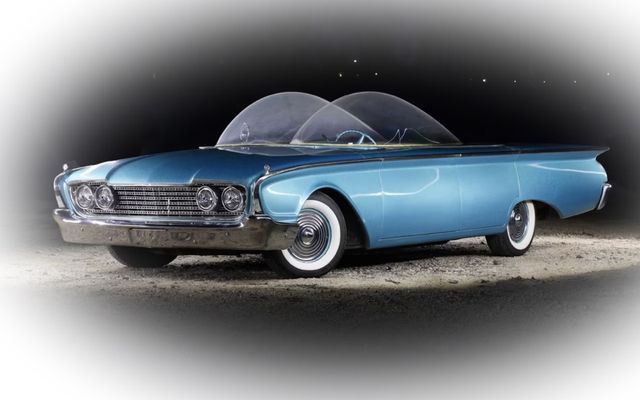
1960 Ford Fairlane “The Spaceliner” Custom Concept
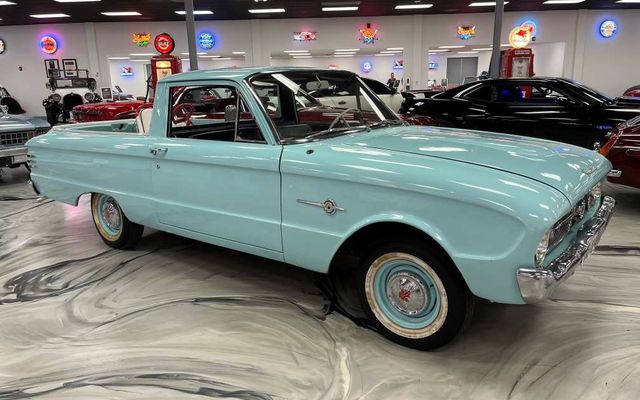
1960 Frontenac Falcon Ranchero
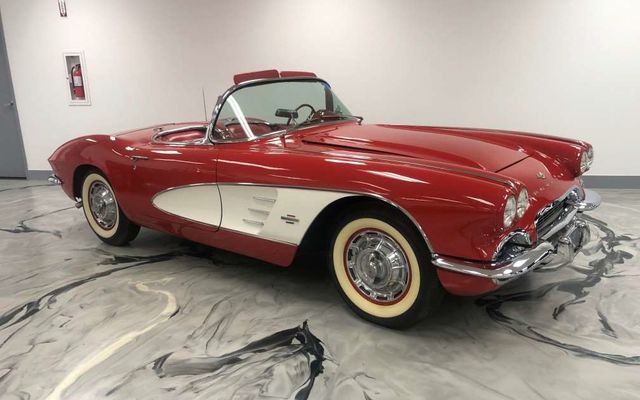
1961 Chevrolet Corvette C1 Convertible
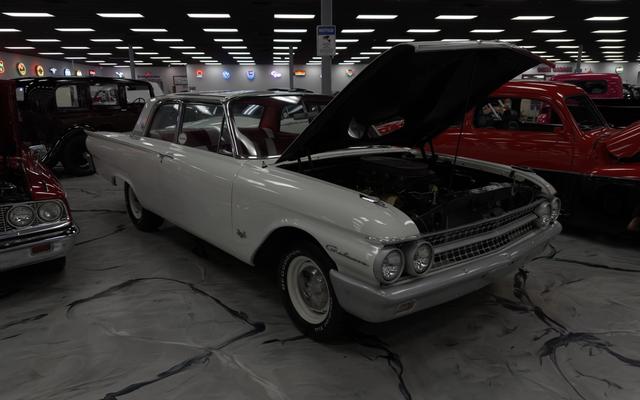
1961 Ford Galaxie Club Sedan
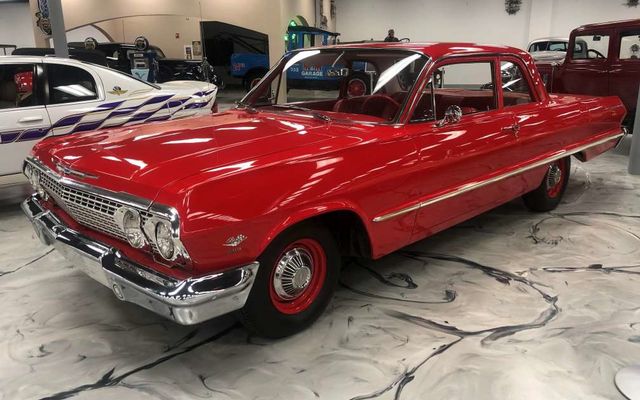
1963 Chevrolet Bel Air 5th Gen.
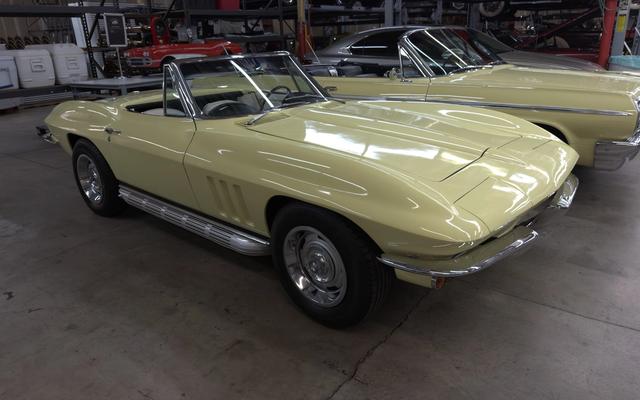
1963 Chevrolet Corvette Convertible
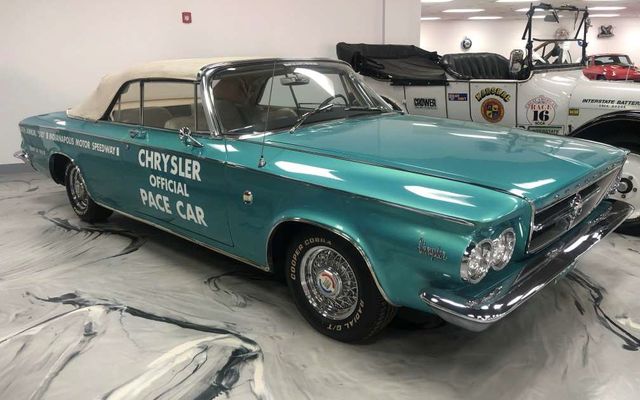
1963 Chrysler 300 Pace Setter Convertible
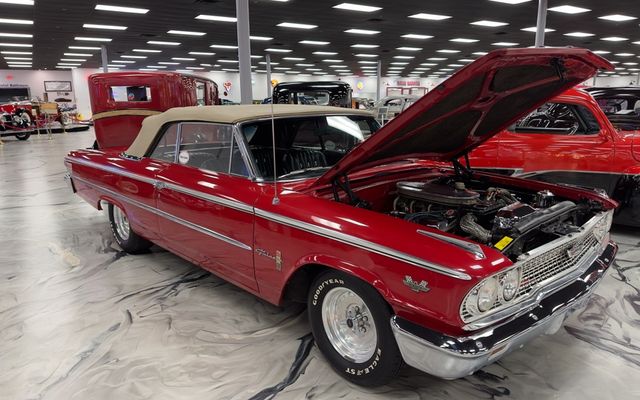
1963 Ford Galaxie 500/XL Convertible
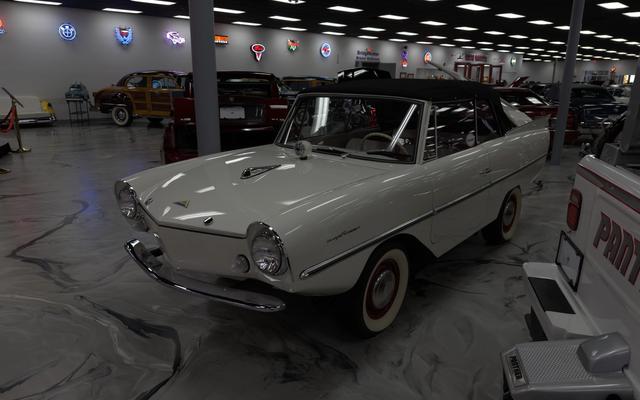
1964 Amphicar Model 770
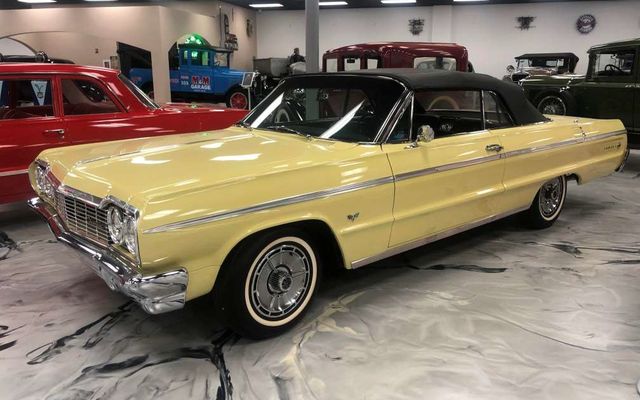
1964 Chevrolet Impala SS Convertible