No. 154 of 217
The Buick Riviera is a personal luxury car that was marketed by Buick from 1963 to 1999, with the exception of the 1994 model year.
The Riviera was radically redesigned for the 1971 model year with flowing and dramatic "boat-tail" styling. Designed under Bill Mitchell's direction, it was penned by Jerry Hirshberg, future head of design for Nissan. The car has a unique two-piece fastback rear window, inspired by the 1963 Corvette Sting Ray coupe.
Sluggish sales of the third generation Riviera led GM to believe that the boattail deck lid was too radical for most customers' tastes, so in 1973 it was blunted and made slightly shorter.
Only 34,080 Buick Rivieras were produced in 1973 and the original price of this car was approximately $6,800 as equipped. This beautiful and rare car has fewer than 45,000 original miles!
455 cubic-inch V-8 engine
315 horsepower
3-speed automatic transmission
122-inch wheelbase
Buick Riviera Third Generation (1971 - 1973)
The Riviera was radically redesigned for the 1971 model year with flowing and dramatic "boat-tail" styling. Designed under Bill Mitchell's direction, it was penned by Jerry Hirshberg, future head of design for Nissan, mating the two-piece vee-butted fastback rear window, inspired by the 1963 Corvette Sting Ray coupe, to the Riviera's platform.
The design was originally intended for the smaller A-body or its related G-body, as shown by a full scale clay model of an A-body based boat-tail Riviera recently revealed. Given the late stage of the 1968-72 A/G platform evolution and accretive cost to add another version to it, GM Management decreed that the next Riviera use the full sized GM B platform body—expanded for 1971 by 3 in (76 mm) in wheelbase and more than 120 lb (54 kg) heavier— which produced controversial looks, making for a sharp departure from those of the Toronado and Eldorado. (Collectible Automobile ran an article about 1971–76 full-sized Buicks in which one sketch design for their 2-door coupes which was rejected resembled the 1971–73 Riviera).
This generation introduced a much more visual representation of the "sweepspear", with a more faithful representation to the version that appeared on 1950s Buicks in both the side molding and beltline. Large, round wheel openings were intended to convey more of a sporty air. The only engine available was Buick's own 455 ci V8 engine producing 315 hp (235 kW), with 330 hp (246 kW) with the Gran Sport (GS) package.
The 455 engine had a lower compression ratio to meet EPA emissions requirements, together with the shift from SAE gross to SAE net ratings this reduced claimed power to 255 hp (190 kW), with 265 hp (198 kW) in the Gran Sport. Performance remained reasonably brisk, with a 0–60 mph time of 8.1 seconds for the GS, but the Riviera's sporty image was rapidly fading. One noteworthy advance was Buick's Max Trac traction control. The 1971 Riviera also features GM's "Full-Flo" ventilation system and two large deck lid louvers are prominent on the trunk lid.
Despite these features, Riviera sales for 1971 dropped to 33,810, the lowest to date. The 1972 Riviera received a new, egg-crate grille, more substantial front bumpers to prepare for the new 5-mph impact legislation, restyled taillight trim, and the louvers were removed from the trunk lid. The 1972 Riviera also featured a redesigned ventilation system, and the 455-engine switched to net power ratings, 225 hp (168 kW) or 250 hp (186 kW) in the Gran Sport, although the actual drop in net power was only 5 hp (4 kW). Sales remained stagnant at 33,728, a drop of 82 from the prior year.
For 1973, the Riviera underwent a number of changes. The front bumper was redesigned to be thicker and featured bumper guards as standard in order to meet 1974 impact-bumper standards, the grille was switched back to horizontal slats, and the front lamps were moved from the bumper and were now integrated into the headlights, wrapping around the corners of the car. Sluggish sales of the third generation Riviera led GM to believe that the boattail deck lid was too radical for most customers' tastes, so in 1973 it was blunted and made slightly shorter. The taillights, meanwhile, were moved down from the sheet metal and into the bumper, and the rear license plate location was moved from the left side of the bumper to the center. The 250 hp (186 kW) engine became standard, with 260 hp (194 kW) with the Stage One package. This also included a limited-slip differential and a chrome-plated air cleaner. The "Gran Sport" package was still available as a separate option package consisting of a ride-and-handling package that included a rear stabilizer bar, JR78-15 whitewall steel-belted radial tires, a specially tuned "radial roadability" suspension, additional sound insulation and special "Gran Sport" badging. The design changes however only led to a marginal increase in sales, with 34,080 being produced for the model year.
Muscle & Speed / 1960–1979
More from the collection.
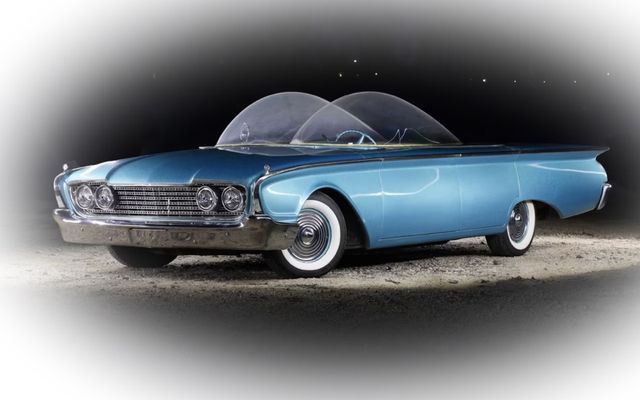
1960 Ford Fairlane “The Spaceliner” Custom Concept
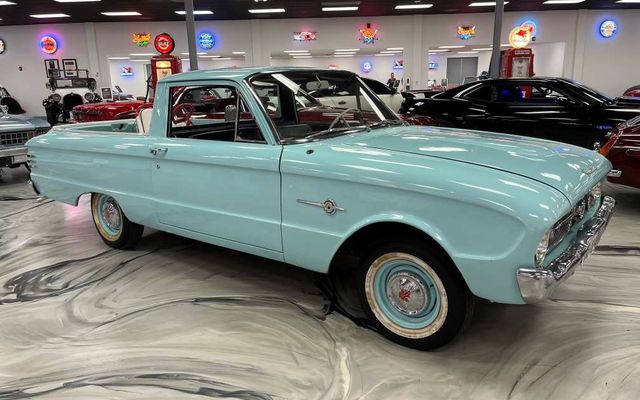
1960 Frontenac Falcon Ranchero
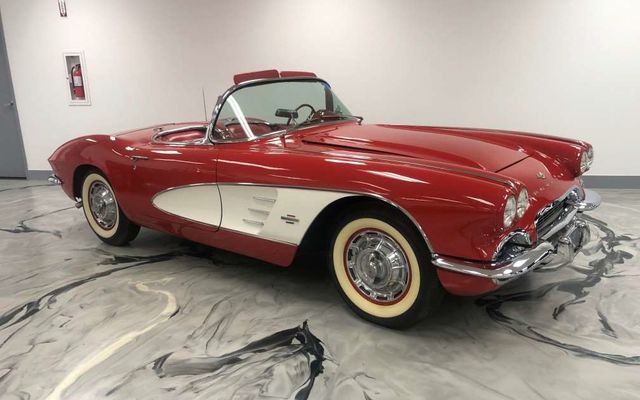
1961 Chevrolet Corvette C1 Convertible
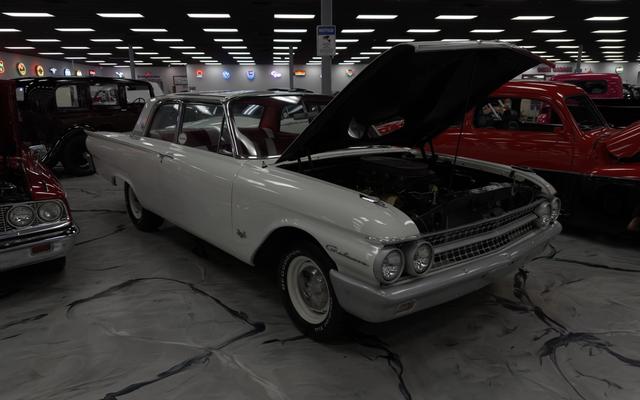
1961 Ford Galaxie Club Sedan
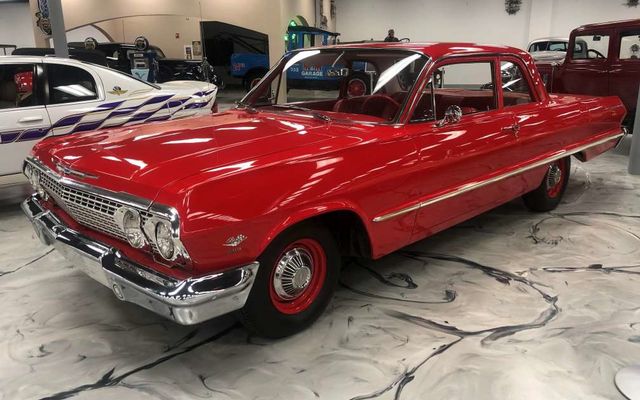
1963 Chevrolet Bel Air 5th Gen.
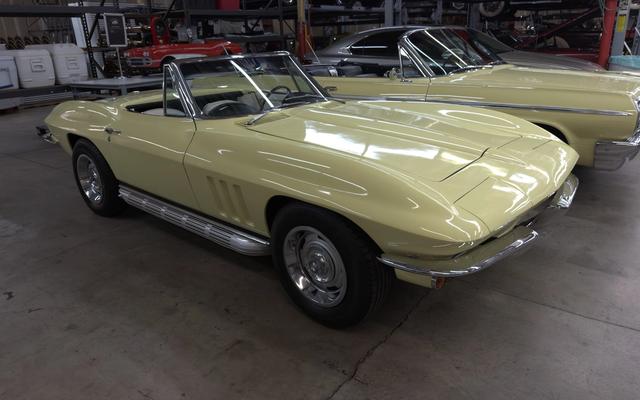
1963 Chevrolet Corvette Convertible
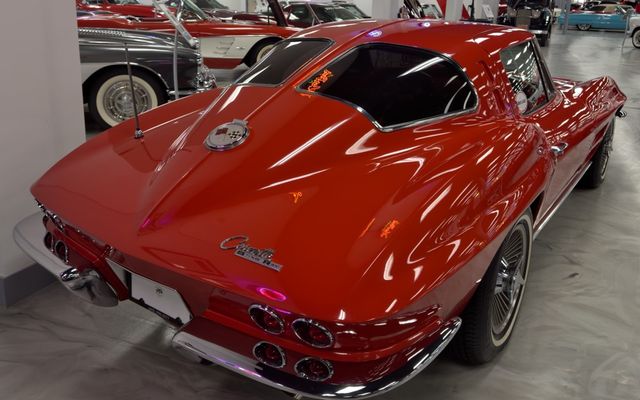
1963 Chevrolet Corvette Split Window C2
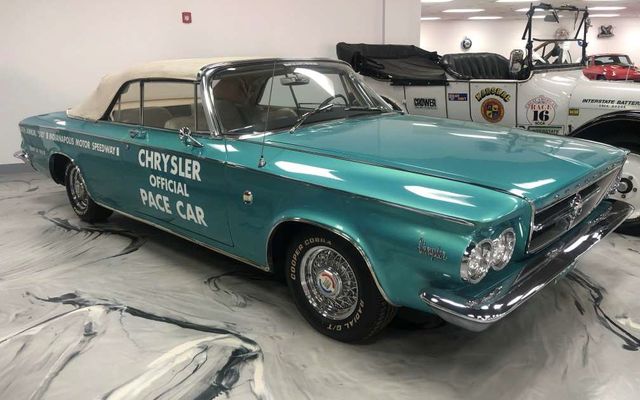
1963 Chrysler 300 Pace Setter Convertible
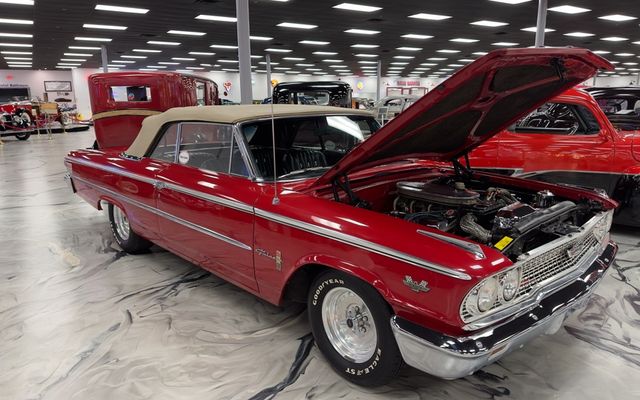
1963 Ford Galaxie 500/XL Convertible
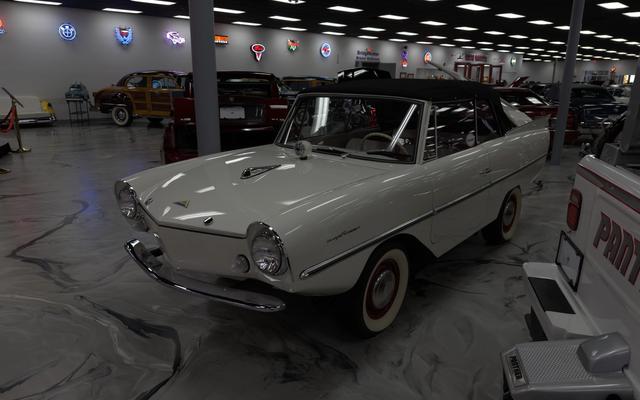
1964 Amphicar Model 770