No. 147 of 217
The 1969 Chevrolet Corvette, particularly those equipped with the 427 cubic-inch V8, is a legendary model from the C2 (1963-1967) and C3 (1968-1982) transitional era, as 1969 marked the second year of the C3 generation. Known as the “Stingray” (now one word), the 1969 Corvette 427 combined aggressive styling with brute-force performance, cementing its status as a muscle car icon. Below are details on its design, engineering, and historical context.
The 1969 Corvette was part of the C3 generation, introduced in 1968, designed by Larry Shinoda under Bill Mitchell’s direction. It drew heavy inspiration from the 1965 Mako Shark II concept car, featuring; sleek, curvaceous lines with a “Coke bottle” shape (narrow waist, flared fenders), pop-up headlights and hidden wipers, continuing from the C2, a more aggressive front end with a pronounced grille and optional side-exit exhausts and T-top removable roof panels (coupe) or convertible options, enhancing open-air driving.
The 1969 model saw minor refinements over 1968, including improved interior ergonomics and a slightly revised grille with egg-crate inserts. The exterior colors included iconic shades like Riverside Red, LeMans Blue, and Monaco Orange, with optional chrome trim and rally wheels. The cabin featured a driver-oriented cockpit with bucket seats, a three-spoke steering wheel, and a center console. Upgrades included optional leather upholstery, telescopic steering column, and AM/FM stereo.
Criticisms persisted about cramped legroom and interior quality compared to European rivals, but the focus remained on performance. The C3’s design aimed to blend American muscle with European sports car aesthetics, targeting enthusiasts seeking raw power and bold looks.
The 1969 Corvette retained the C2’s ladder-type frame, providing a stiff platform for performance driving. Independent rear suspension used a transverse leaf spring, differential-mounted half-shafts, and control arms, offering superior handling for the era. Front suspension featured unequal-length A-arms with coil springs. Optional heavy-duty suspension (F41) or the Z51 package enhanced handling for track use.
The 427 Corvette was developed under Zora Arkus-Duntov’s influence, who prioritized performance to compete with Shelby Cobras and European sports cars like Ferrari and Porsche. The C3 aimed to refine the C2’s formula while pushing the limits of American V8 power. The 1969 Corvette 427 epitomized the peak of the muscle car era, blending raw power with futuristic styling. It appealed to drag racers, street enthusiasts, and collectors alike. The L88 and ZL1 variants became legends in racing circles, dominating SCCA and drag racing events. Optional side-exit exhausts (available with 427 engines) enhanced the car’s aggressive sound and look. Improved cooling systems to handle the 427’s immense power output. Positraction limited-slip differential for better traction.
Engine: 427 cubic-inch (7.0L) V8 was the pinnacle of Corvette performance in 1969.
Optional Engines:
L36: 390 horsepower, with a single four-barrel carburetor, designed for street performance.
L68: 400 horsepower, equipped with three two-barrel carburetors (Tri-Power).
L71: 435 horsepower, also with Tri-Power, tuned for maximum performance.
L88: a rare, race-focused option rated at 430 horsepower (underrated; likely over 500 hp), designed for racing with high-compression heads, aluminum intake, and minimal creature comforts.
ZL1: an ultra-rare, all-aluminum 427 V8, also rated at 430 hp but significantly lighter, built for racing (only two ZL1 Corvettes were sold to the public in 1969).
Transmissions included a 4-speed manual (standard), optional 3-speed Turbo Hydra-Matic automatic, or heavy-duty M22 “Rock Crusher” manual for high-performance models.
Performance:
L71 (435 hp): 0-60 mph in ~5.3 seconds, quarter-mile in ~13.8 seconds, top speed ~140-150 mph.
L88/ZL1: Even quicker, with quarter-mile times dipping into the low 13s or high 12s with proper tuning.
Braking: Standard four-wheel disc brakes (introduced in 1965) provided strong stopping power, though heavy 427 models stressed the system during aggressive driving.
Production numbers by color in the 1969 Corvette was offered in ten exterior colors. While exact breakdowns for 427-equipped Corvettes by color are not fully documented in the provided sources, total production for the 1969 model year was 38,762 units (22,129 coupes, 16,633 convertibles). The 427 engine options were installed in a significant portion of these vehicles, with the following estimates based on available data:
L36 (427/390 hp): ~10,531 units (most popular 427 option).
L68 (427/400 hp, Tri-Power): ~2,072 units.
L71 (427/435 hp, Tri-Power): ~2,722 units.
L88 (427/430 hp, racing): 116 units.
L89 (L71 with aluminum heads): 390 units.
ZL1 (all-aluminum 427/430 hp): 2 units (some sources note a third red ZL1, but only two are factory-confirmed).
Color distribution for all 1969 Corvettes (not specific to 427 engines) from historical records includes:
Tuxedo Black: ~1,976 units (5.1%).
Can-Am White: ~2,396 units (6.2%).
Monaco Orange: ~2,673 units (6.9%).
LeMans Blue: ~9,952 units (25.7%, most popular).
Riverside Red: ~2,672 units (6.9%).
Fathom Green: ~2,398 units (6.2%).
Daytona Yellow: ~2,951 units (7.6%).
Cortez Silver: ~5,931 units (15.3%).
Burgundy: ~4,355 units (11.2%).
Monza Red: ~3,458 units (8.9%).
Key option codes for 1969 Corvette 427 models include:
L36: $221.20, 427/390 hp with Rochester 4-barrel carburetor.
L68: $326.55, 427/400 hp with Holley Tri-Power (three two-barrel carburetors).
L71: $437.10, 427/435 hp with Holley Tri-Power, solid lifters, and 11.0:1 compression.
L88: $1,032.15, 427/430 hp (underrated, ~500-550 hp), high-compression, aluminum heads, single 4-barrel carb, designed for racing.
L89: $832.05, L71 with lightweight aluminum cylinder heads (390 units).
ZL1: $4,718.35 ($3,010 on top of L88), all-aluminum 427 block and heads, ~460-560 hp, ultra-rare (2 factory units).
J56: Heavy-duty brakes ($45.30, 81 units, standard on L88 except one unit).
F41: Heavy-duty suspension ($36.90, common with 427s for better handling).
G81: Positraction limited-slip differential (standard on L88, optional on others).
K66: Transistor ignition (required for L88).
M21: 4-speed close-ratio manual transmission (common with 427s).
M40: Turbo Hydra-Matic 3-speed automatic (255 L71 units in 1969 had this).
Muscle & Speed / 1960–1979
More from the collection.
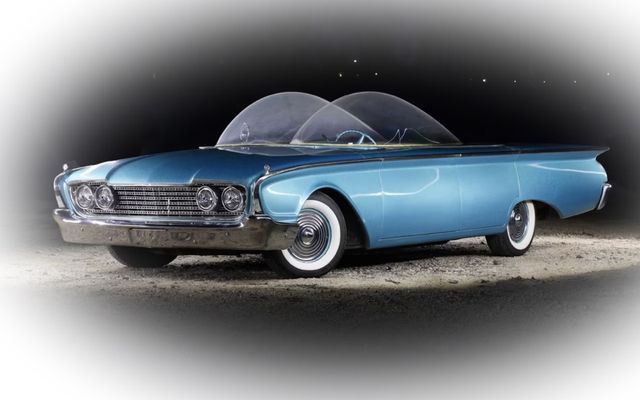
1960 Ford Fairlane “The Spaceliner” Custom Concept
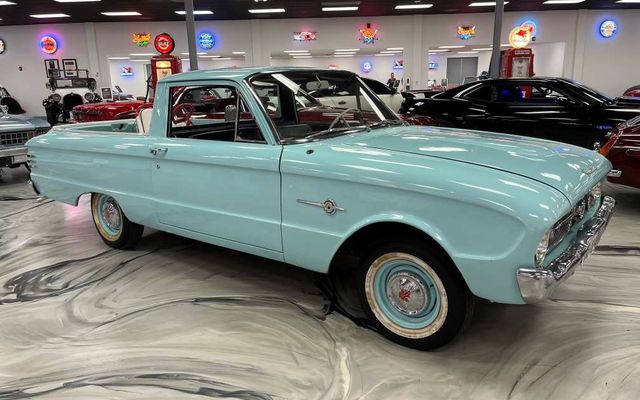
1960 Frontenac Falcon Ranchero
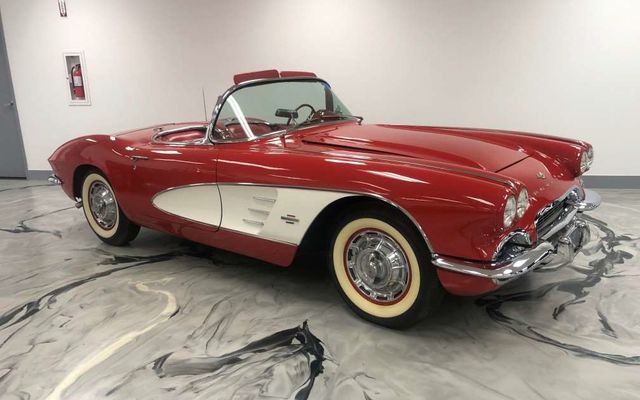
1961 Chevrolet Corvette C1 Convertible
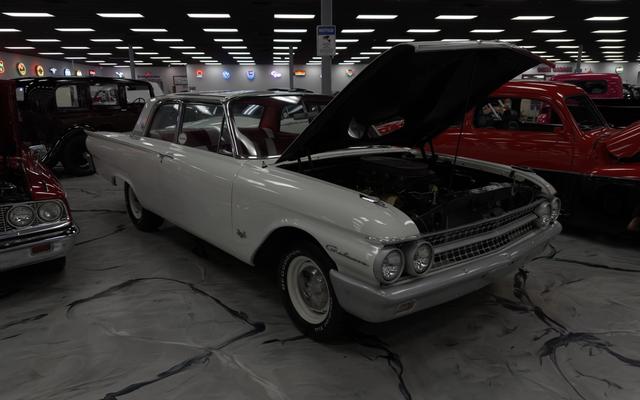
1961 Ford Galaxie Club Sedan
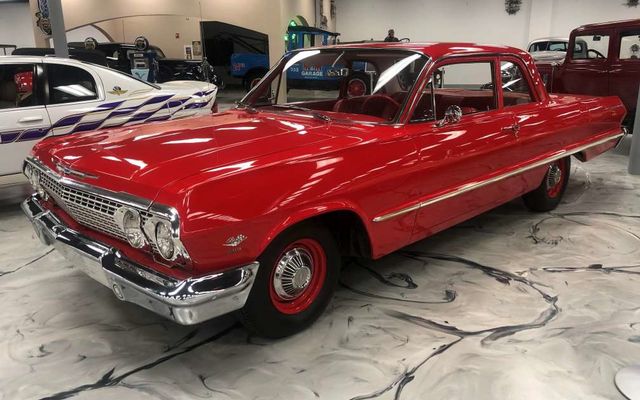
1963 Chevrolet Bel Air 5th Gen.
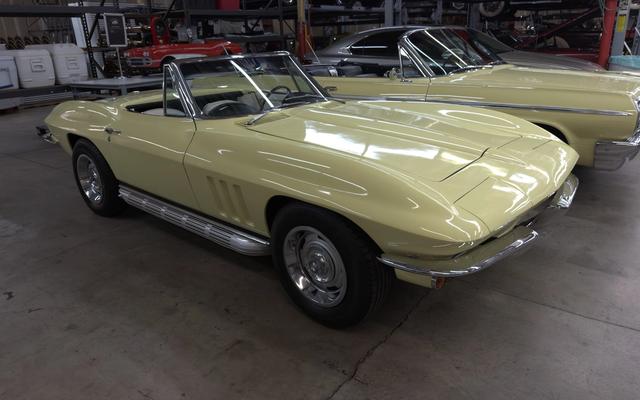
1963 Chevrolet Corvette Convertible
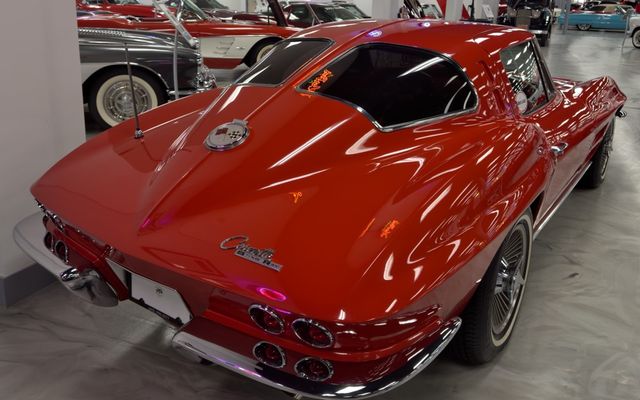
1963 Chevrolet Corvette Split Window C2
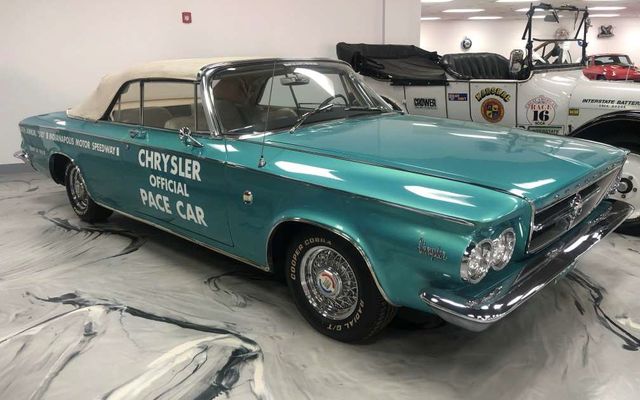
1963 Chrysler 300 Pace Setter Convertible
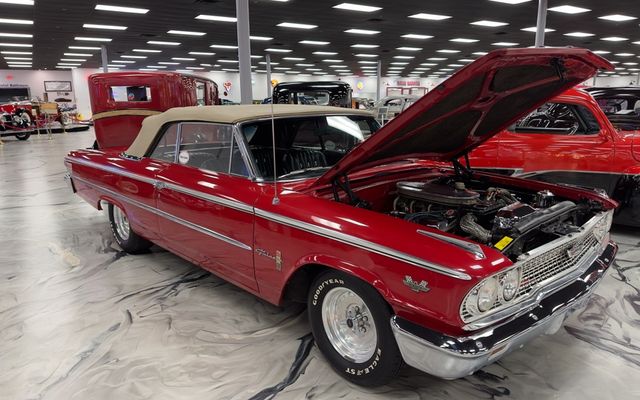
1963 Ford Galaxie 500/XL Convertible
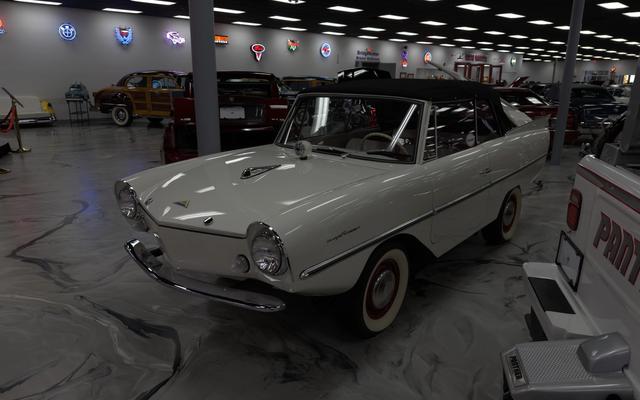
1964 Amphicar Model 770