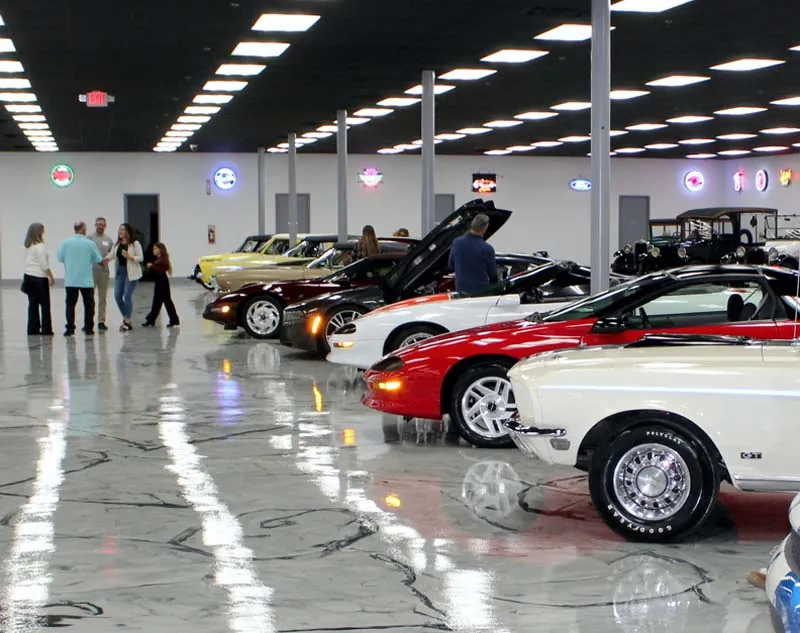
No. 127 of 217
The Chevrolet Corvette (C2) is the second-generation Corvette sports car, produced by the Chevrolet division of General Motors (GM) for the 1963 through 1967 model years.
The 1963 Sting Ray production car's lineage can be traced to two separate GM projects: the Q-Corvette, and Bill Mitchell's racing Sting Ray. The Q-Corvette exercise of 1957 envisioned a smaller, more advanced Corvette as a coupe-only model, boasting a rear transaxle, independent rear suspension, and four-wheel disc brakes, with the rear brakes mounted inboard. Exterior styling was purposeful, with peaked fenders, a long nose, and a short, bobbed tail.
For the 1966 Corvette, the big-block V8 came in two forms: 390 hp (290 kW) on 10.25:1 compression, and 425 bhp via 11:1 compression, larger intake valves, a bigger Holley four-barrel carburetor on an aluminum manifold, mechanical lifters, and four- instead of two-hole main bearing caps. Though it had no more horsepower than the previous high-compression 396, the 427-cubic-inch (6,993 cc), 425 hp (317 kW) V8 packed a lot more torque – 460 lb⋅ft (624 N⋅m) vs. 415 lb⋅ft (563 N⋅m). In the 1960s engine outputs were at times deliberately understated. This happened for two reasons; to placate nervous insurance companies, and to allow the cars to qualify for lower NHRA brackets based on horsepower and weight. Estimates of up to 450 hp (336 kW) for the 427 have been suggested as being closer to the truth. Conversely, power ratings in the sixties were done in SAE Gross Horsepower, which is measured on an engine without accessories or air filter or restrictive stock exhaust manifold, invariably giving a significantly higher rating than the engine actually produces when installed in the automobile.[28] SAE Net Horsepower is measured with all accessories, air filters and factory exhaust system in place; this is the standard that all US automobile engines have been rated at since 1972. With big-block V8s being the order of the day, there was less demand for the 327, so small-block offerings were cut from five to two for 1966, and only the basic 300- and 350-bhp versions were retained. Both required premium fuel on compression ratios well over 10.0:1, and they didn't have the rocket-like thrust of the 427s, but their performance was impressive all the same. As before, both could be teamed with the Powerglide automatic, the standard three-speed manual, or either four-speed option.
The 1966 model's frontal appearance was mildly altered with an eggcrate grille insert to replace the previous horizontal bars, and the coupe lost its roof-mounted extractor vents, which had proven inefficient. Corvettes also received an emblem in the corner of the hood for 1966. Head rests were a new option, one of the rarest options was the Red/Red Automatic option with power windows and air conditioning from factory which records show production numbered only 7 convertibles and 33 coupes. This relative lack of change reflected plans to bring out an all-new Corvette for 1967. It certainly did not reflect a fall-off in the car's popularity, however. In fact, 1966 would prove another record-busting year, with volume rising to 27,720 units, up some 4,200 over 1965s sales.
327 cubic inch engine
300 horsepower
4-speed transmission
Posi-traction axle
4-wheel independent suspension
Base price of $4,084
Muscle & Speed / 1960–1979
More from the collection.
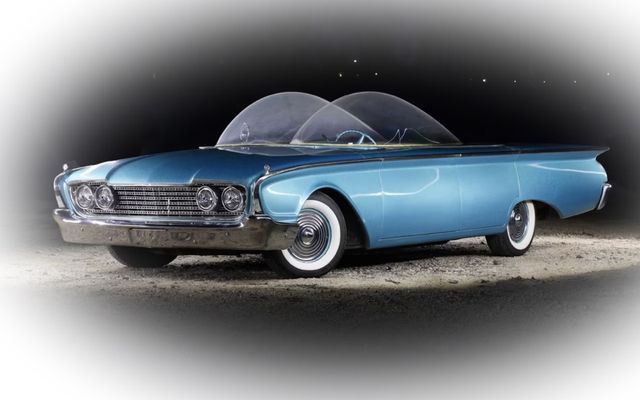
1960 Ford Fairlane “The Spaceliner” Custom Concept
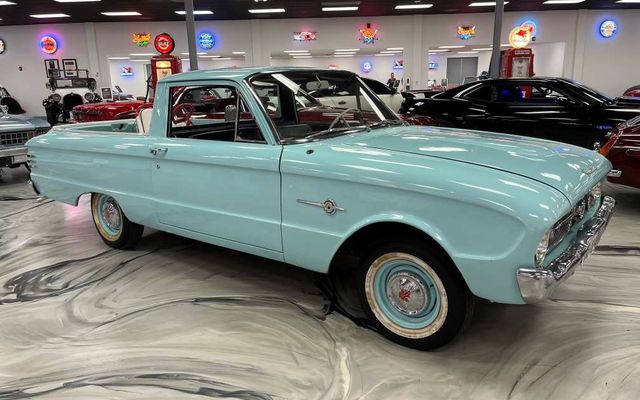
1960 Frontenac Falcon Ranchero
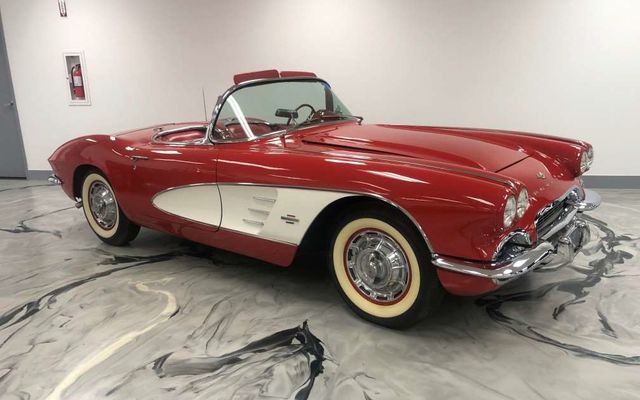
1961 Chevrolet Corvette C1 Convertible
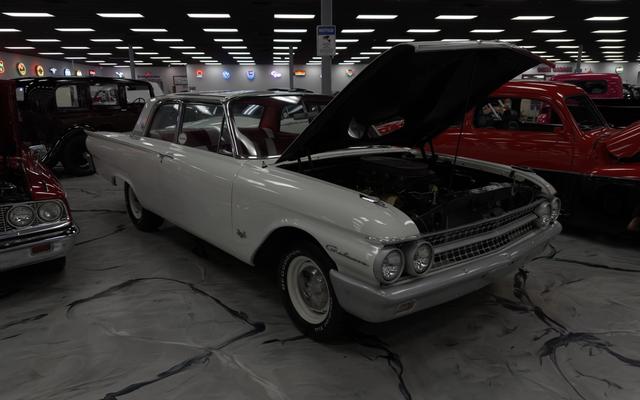
1961 Ford Galaxie Club Sedan
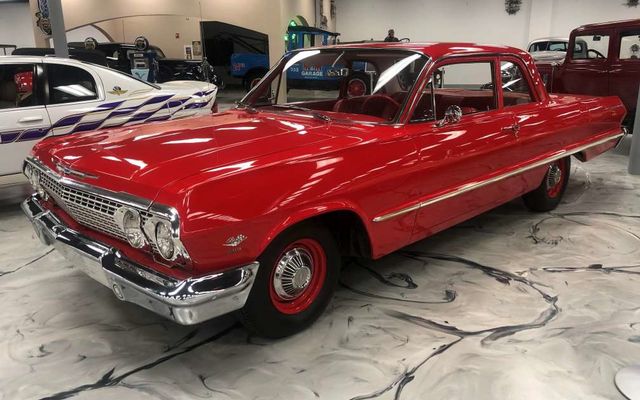
1963 Chevrolet Bel Air 5th Gen.
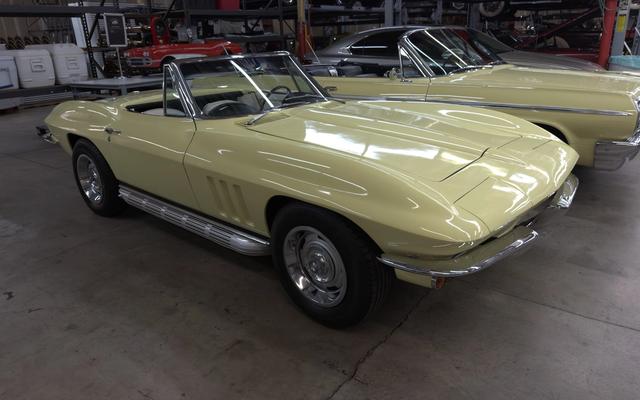
1963 Chevrolet Corvette Convertible
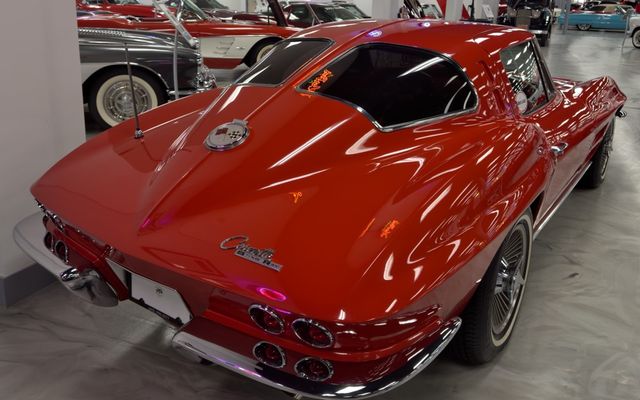
1963 Chevrolet Corvette Split Window C2
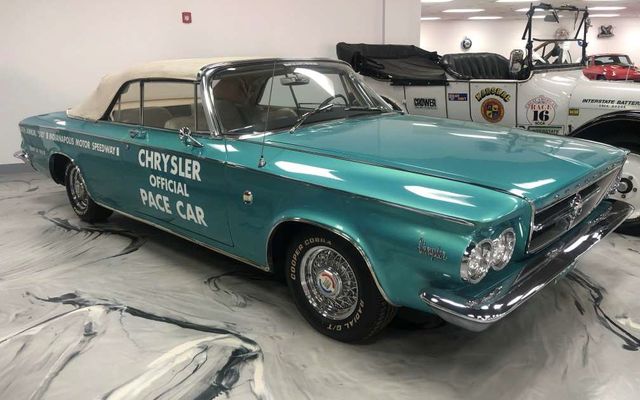
1963 Chrysler 300 Pace Setter Convertible
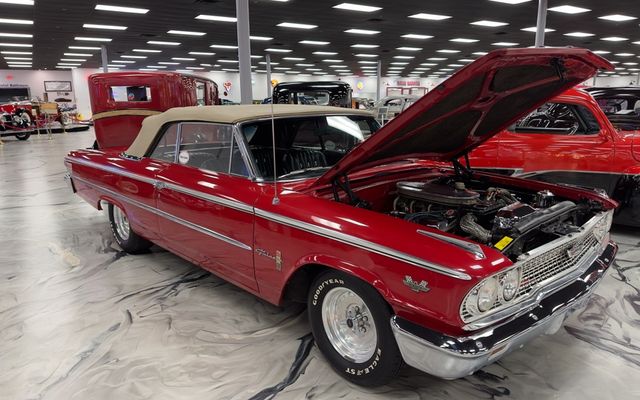
1963 Ford Galaxie 500/XL Convertible
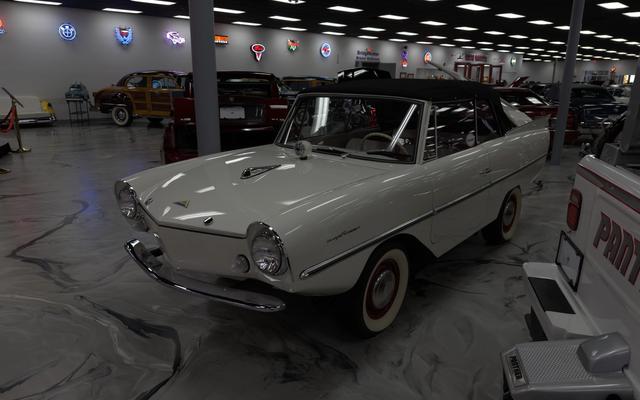
1964 Amphicar Model 770